Concrete Driveways in Muskego & Greater Milwaukee
We have been pouring driveways in Muskego since 1965. Same family, three generations, and either Tony or Nino overseeing your project. That last part is the whole difference: the decisions that determine whether a driveway lasts thirty years or starts coming apart in five all get made before the concrete truck shows up, and almost none of them are visible afterward.
This is the work the #1 State of Wisconsin Concrete Design Award came from, and the reason we are an MBA Parade of Homes contractor. Here is what actually matters on a driveway in this climate.
Concrete Driveway Installation
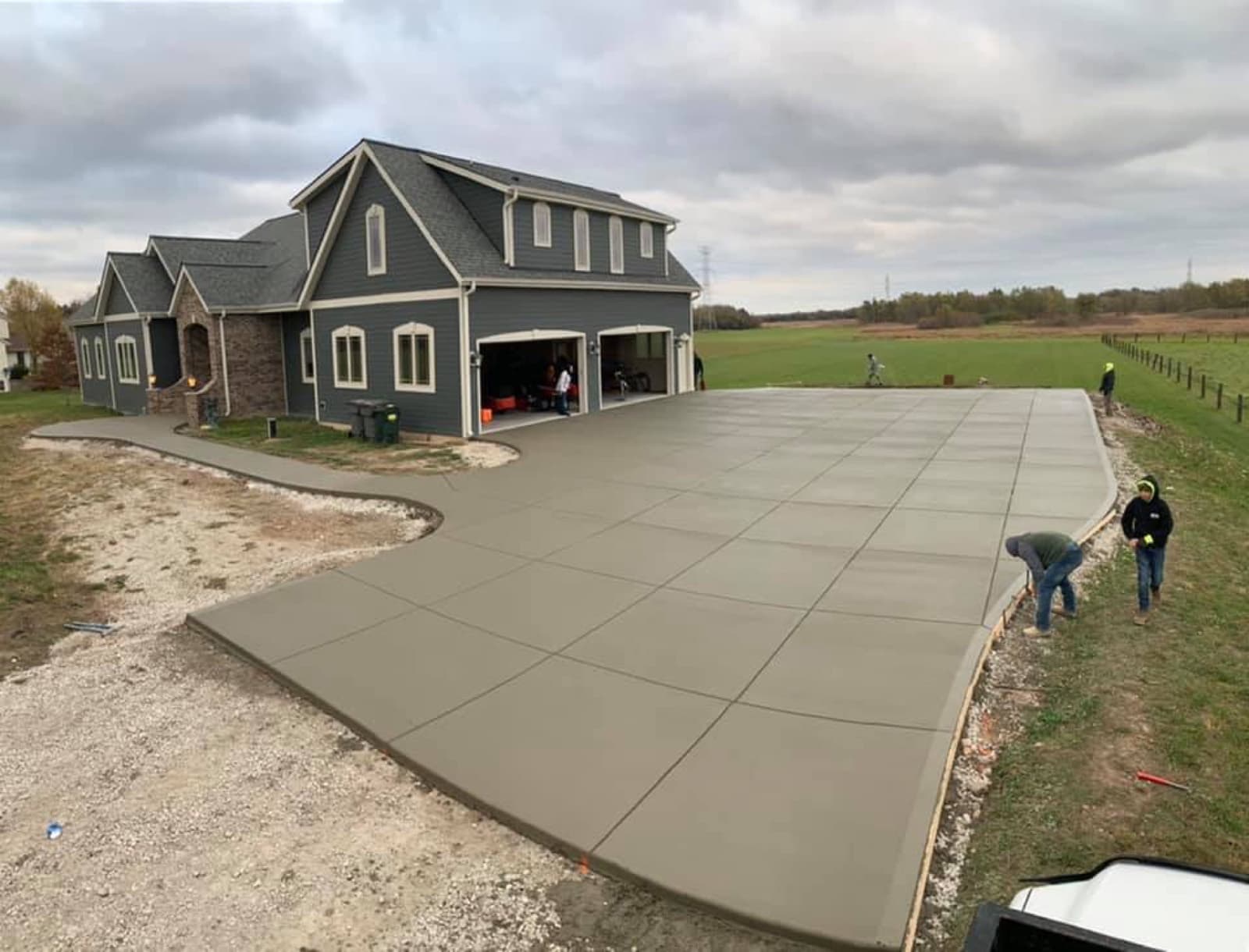
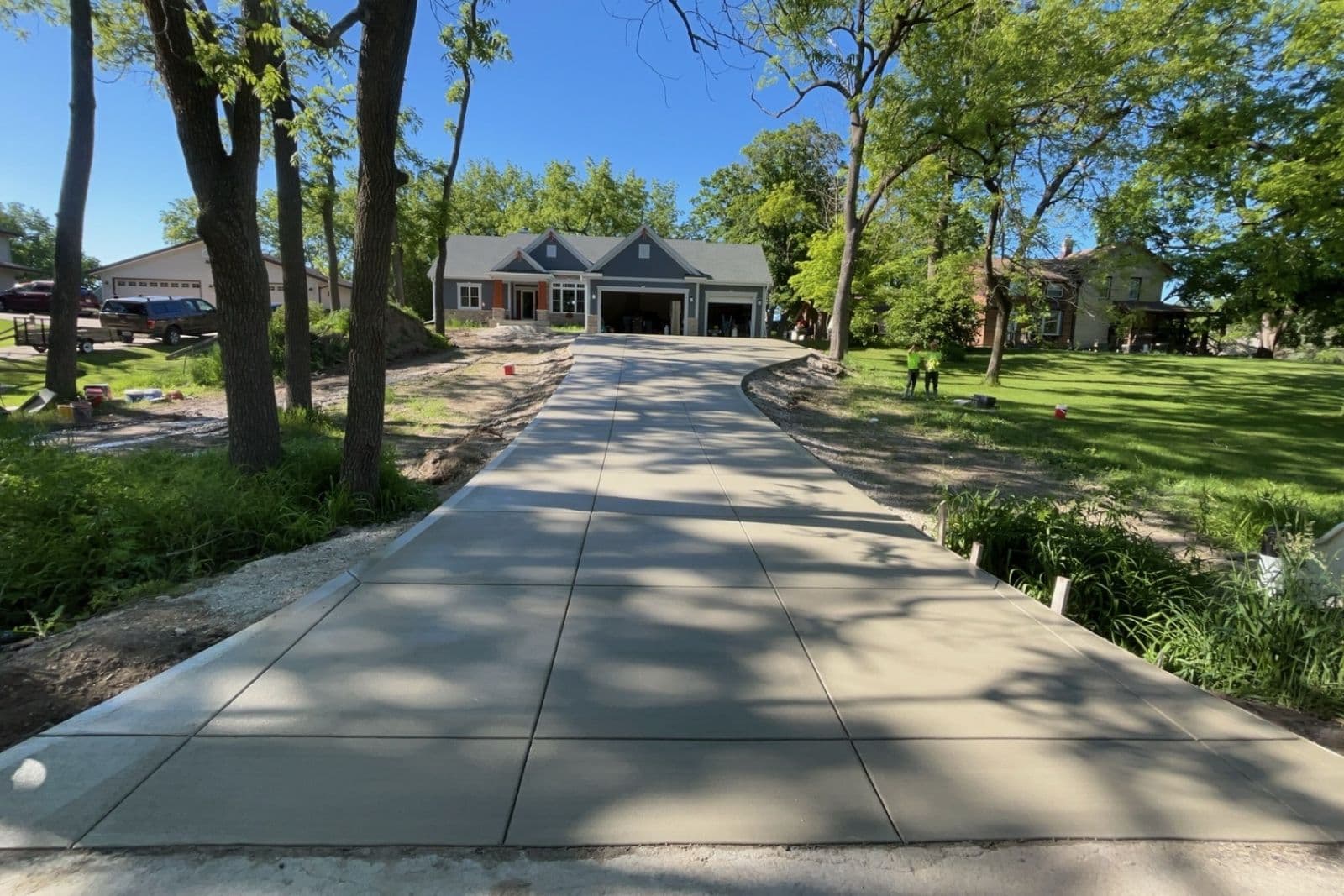
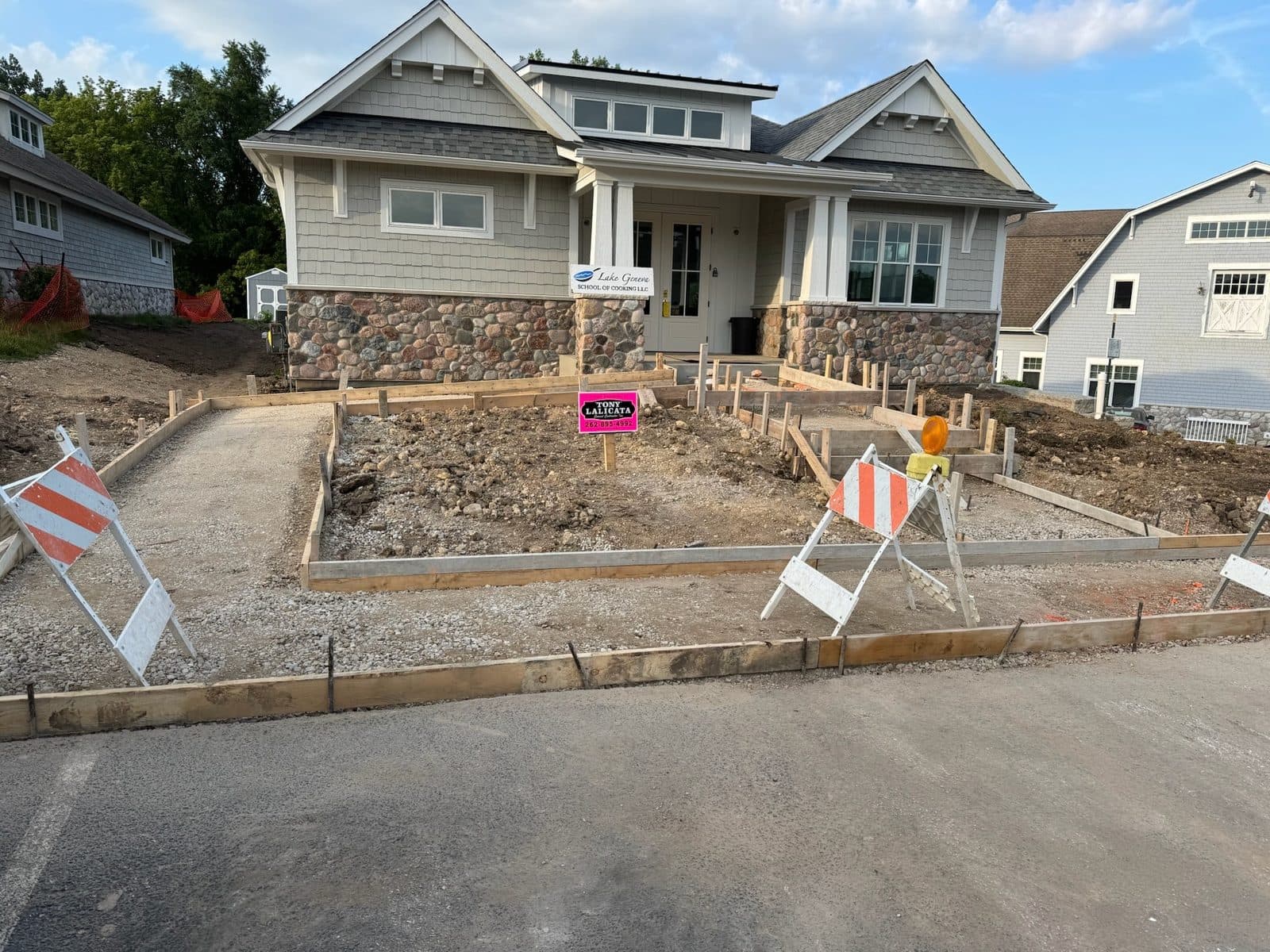
The pour is the part people watch. The base is the part that decides how long it lasts. We evaluate the existing grade and drainage first, excavate to depth, and compact a stone base that carries the load and lets water move instead of trapping it under the slab. On a residential driveway we are typically at four inches over that base, thickened where vehicles turn and where a delivery truck will sit.
Reinforcement goes in before the truck arrives, and control joints get cut on a spacing that matches the slab. Concrete is going to crack. Joints decide where it cracks, and a driveway laid out without them is the most common reason a two-year-old slab already looks a decade old.
Grading is the part nobody thinks about until it is wrong. Water has to run off the driveway and away from the garage and the foundation, not pool at the low spot or drain back toward the house. We set that fall at the planning stage, because it cannot be corrected once the concrete is down.
Driveway Replacement
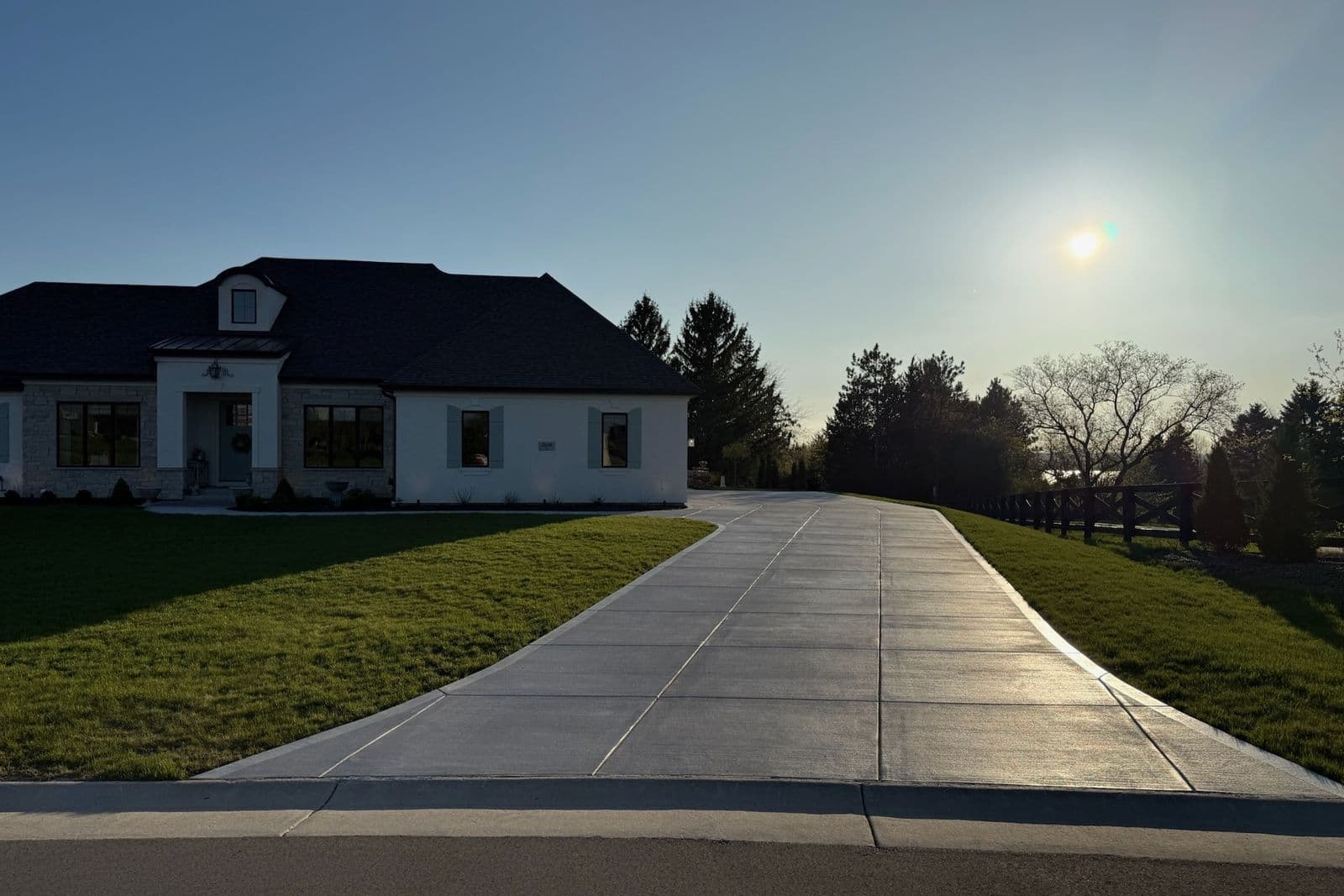
Replacement is about a third of what we do, and most of it is driveways that were poured thin, poured on a base nobody compacted, or poured without proper joints. If yours is spalling across the surface, has cracks you can fit a finger into, or has slabs that have settled out of plane with each other, patching buys you a season.
We take the old driveway out completely, haul it away, fix whatever was wrong underneath, and repour. Nobody sees the base once new concrete is on top of it, which is exactly why some contractors rush it and exactly why we do not. If we find a drainage problem or a soft subgrade during tear-out, you hear about it that day, not after the pour.
Design Options
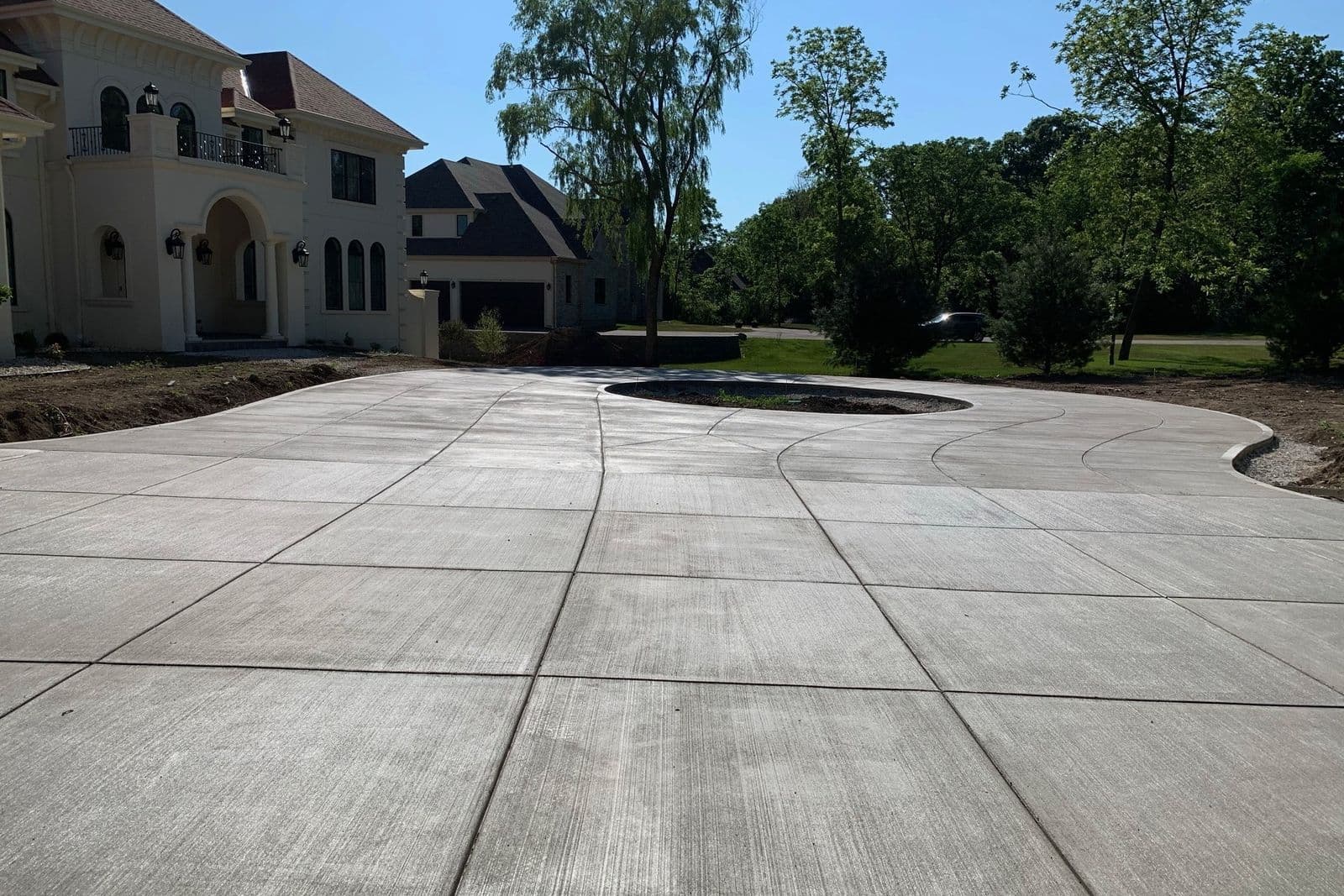
A driveway does not have to be a gray rectangle. Decorative concrete is one of the things this company is known for, and on a front approach it is usually the single highest-impact exterior change a homeowner can make.
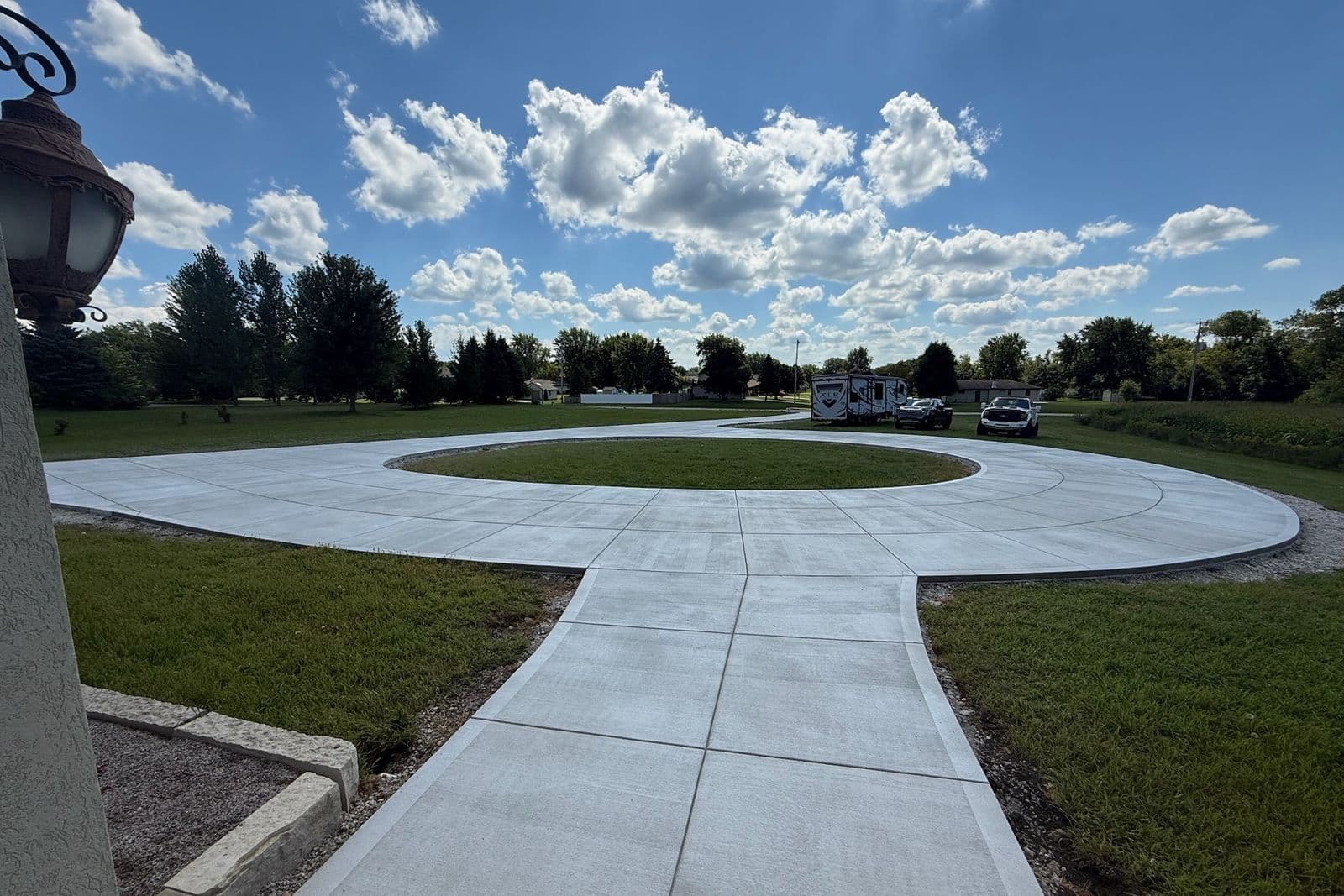
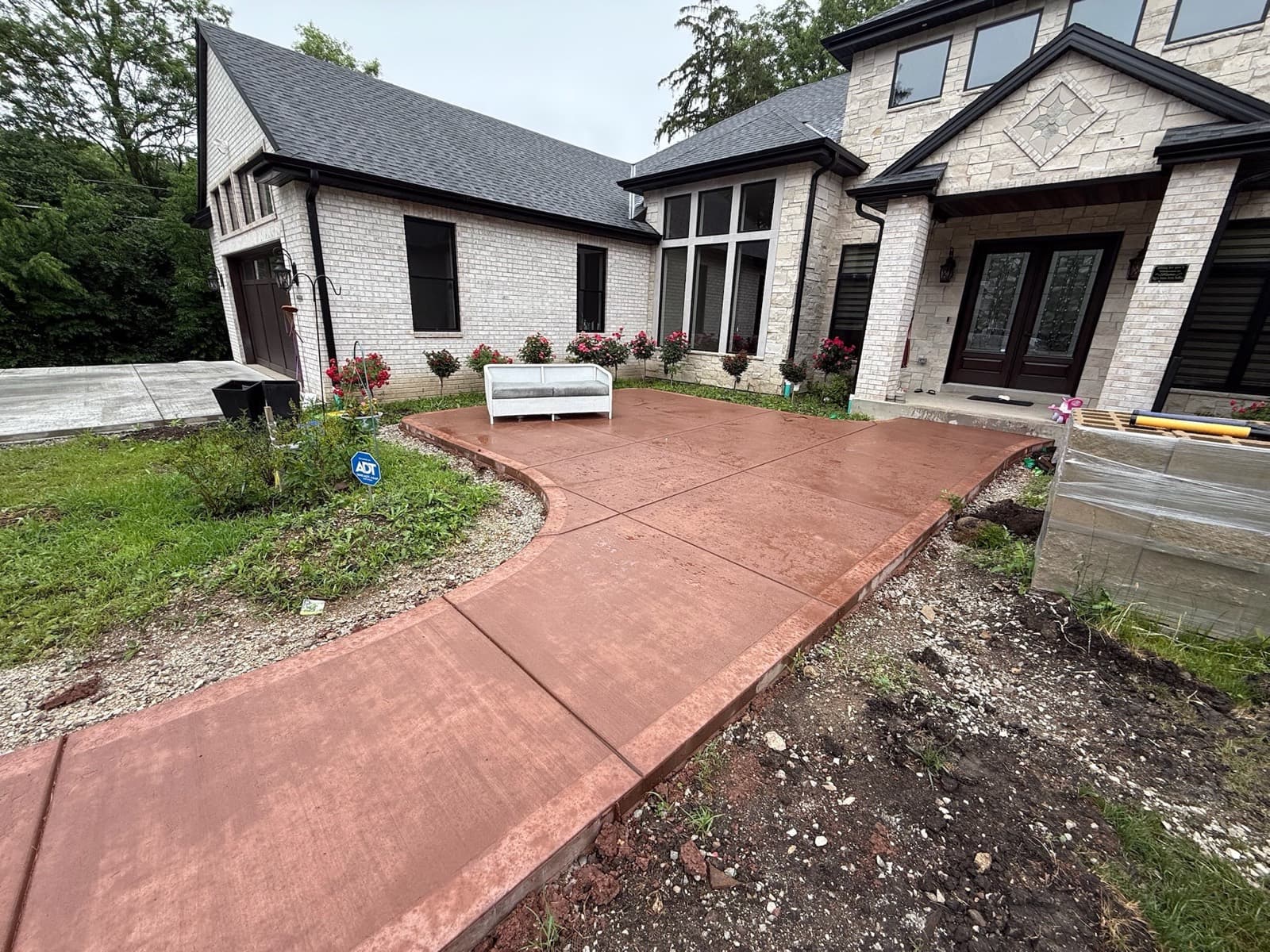
A broom finish is the standard and a good one: it gives you traction on ice and it wears evenly. From there, a stamped border in a stone or cobble pattern frames the driveway and ties it to the walkway and the entry. Integral color moves the whole slab off gray into charcoal, tan or an earth tone that works with the house. Exposed aggregate brings the stone in the mix to the surface for texture and grip. Brick borders and inlays are their own thing and we have been doing them for decades.
We build these into large custom driveways regularly, including projects well into six figures. If you want the driveway to be an architectural feature rather than a parking pad, say so at the estimate and we will lay out options against your house.
Built for Wisconsin Freeze-Thaw
Southeastern Wisconsin runs dozens of freeze-thaw cycles a year. Every one is a chance for water sitting in the concrete to freeze, expand and push the surface apart. Air-entrained concrete gives that water somewhere to go, and we spec it on every exterior pour.
The rest is drainage and what you put on it. Water needs to leave the slab. De-icing salt on young concrete is the fastest way to ruin a good pour, so we tell every customer the same thing: no salt the first winter, and after that sand does the job on anything you own without eating the surface.
Cost & Timeline
A residential driveway is usually two to three days on site: tear-out and prep, the pour, then joints and cleanup. Foot traffic at about 24 hours, cars at about seven days, and full cure strength at 28, which is why we ask you to keep heavy trucks and dumpsters off it the first month.
What a driveway costs depends on size, how much old concrete comes out, what the site conditions and drainage need, thickness, and the finish you choose. We are not trying to be the lowest bid on your driveway and we will not pretend otherwise. The gap between the cheapest quote and ours is usually excavation, base prep and joint work, which is to say the parts you never see and the parts that decide whether you do this again in eight years.
We walk the job, measure it, and put the number in writing. Estimates are free, and we would rather stand in your driveway with you than guess at it over the phone.
Concrete Driveways: what homeowners ask
- How long does a concrete driveway last in Wisconsin?
- Thirty years or more when it is properly based, properly jointed and poured with air-entrained concrete. We still drive past driveways this family put in during the 1970s. The ones that fail early almost always fail for one of two reasons: what is underneath them, or de-icing salt used on concrete that was too young to take it.
- Should I repair my driveway or replace it?
- Isolated cracks and small surface wear can be worth repairing. Widespread cracking, slabs that have settled out of plane, spalling across the surface, or water pooling where it should drain are all signs the problem is under the concrete, and patching the top of it does not touch the cause. We will tell you honestly which one you have. Sometimes the answer is that you have a few more years.
- Can you pour a new driveway over the existing one?
- No, and an offer to do it should tell you something about who is offering. An overlay traps whatever is failing underneath and puts a thin unbonded layer on top of it. If the old driveway is done, it comes out.
- What does a new concrete driveway cost?
- Size drives it, then how much old concrete has to come out, what the site and drainage need, the thickness, and the finish you pick. We are not the cheapest quote you will get. The difference is usually excavation, base prep and joint work, which is the part that decides whether you are doing this again in eight years. We put the whole number in writing after walking the job, and the estimate is free.
- When is the best time of year to pour a driveway in Wisconsin?
- April through November. Concrete cures best in moderate temperatures, so at either end of that window we use cold-weather practices, and we will not pour into conditions that compromise the slab. If it is too late in the season to do it right, we will say so and put you at the front of the spring schedule.
- Concrete or asphalt for a Midwest driveway?
- Asphalt costs less upfront and wants resealing every few years. Concrete costs more to install, lasts two to three times as long with very little maintenance, and holds resale value better. We pour concrete, so weigh that accordingly.
- How soon can I drive on a new concrete driveway?
- Foot traffic at about 24 hours, cars at about seven days, heavy trucks and dumpsters after 28. Concrete keeps gaining strength well past the point where it feels hard underfoot.
- Are you the Lalicata that has been in Muskego since 1965?
- Yes. Tony Lalicata Cement Contractor, Inc. was started by the family grandfather in 1965 and is run today by his grandsons, Anthony Jr. (Tony III) and Nino. There are other concrete companies in this area using the Lalicata name. This is the original one, at 262-895-4992.
- Is it a cement driveway or a concrete driveway?
- Concrete. Cement is one of the ingredients, the powder that binds it together. Concrete is that cement mixed with sand, stone and water, and concrete is what goes in your driveway. Plenty of people say cement driveway and we know exactly what they mean. So do we: our own name has said Cement Contractor since 1965.
Get a real number on your job.
We walk the site, measure it, and put the price in writing. No charge, and no pressure to book on the spot.