
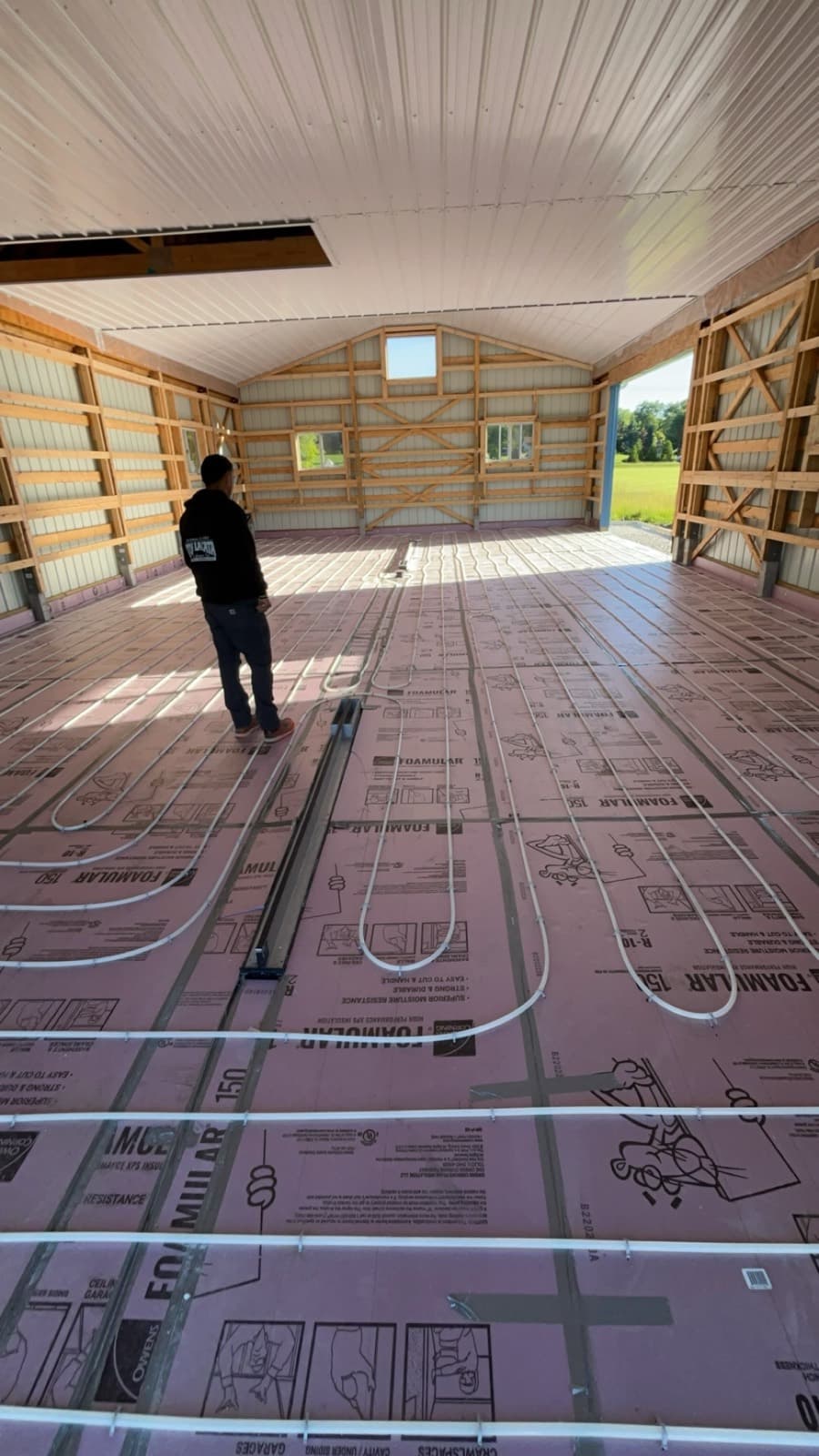
Heated Concrete Driveways & Floors in Wisconsin
Heated concrete is the one thing on this list that has to be decided before the pour, because the tubing goes inside the slab. There is no adding it later without taking the concrete out, which makes it the single most expensive thing to change your mind about after the fact.
Very few residential contractors in Wisconsin install it. We do, and it travels: the same system works on a driveway, an entry walk, a garage floor or a commercial approach.
Hydronic Snowmelt Systems
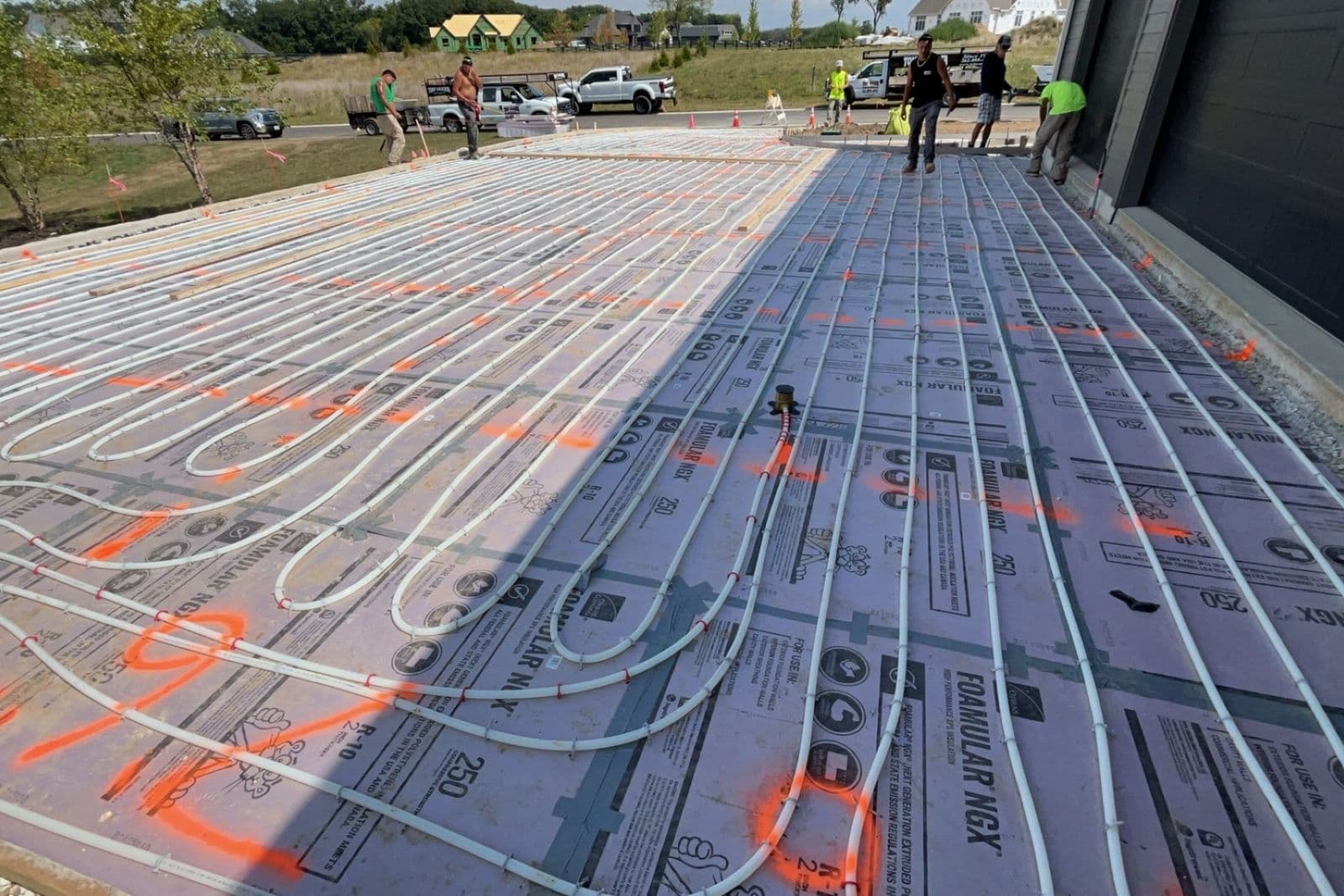
A hydronic system circulates heated fluid through tubing embedded in the slab, warming the concrete from inside so snow melts as it lands and ice does not get a grip. It runs off a boiler and is zoned, so you heat the driveway without heating the walk if that is all you need.
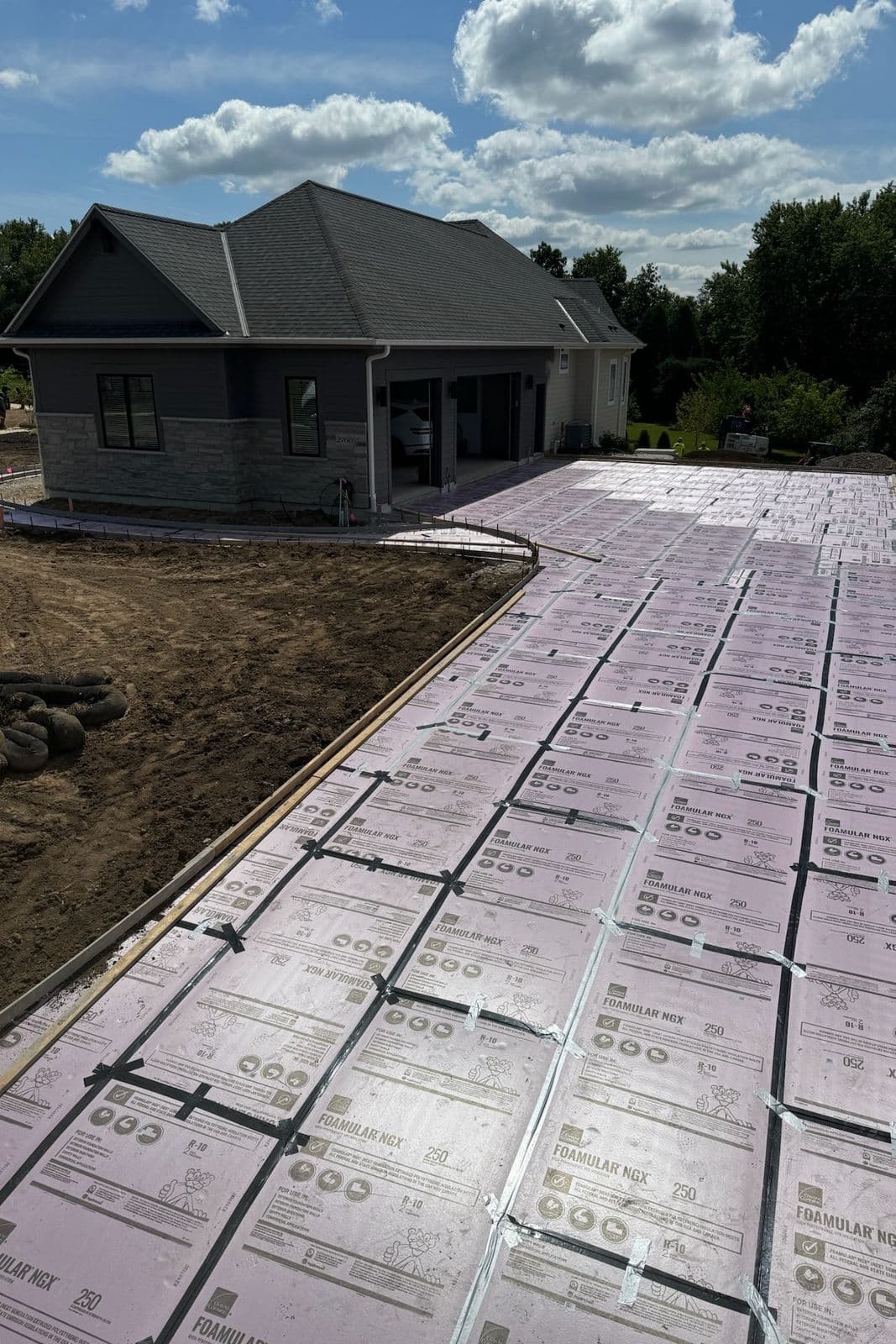
The tubing is laid over insulation board and tied down before the pour, at a spacing set by the area and the heat load. Insulation matters as much as the tubing: without it a meaningful share of what you are paying for goes into the ground rather than up into the slab.
Heated Garage Floors
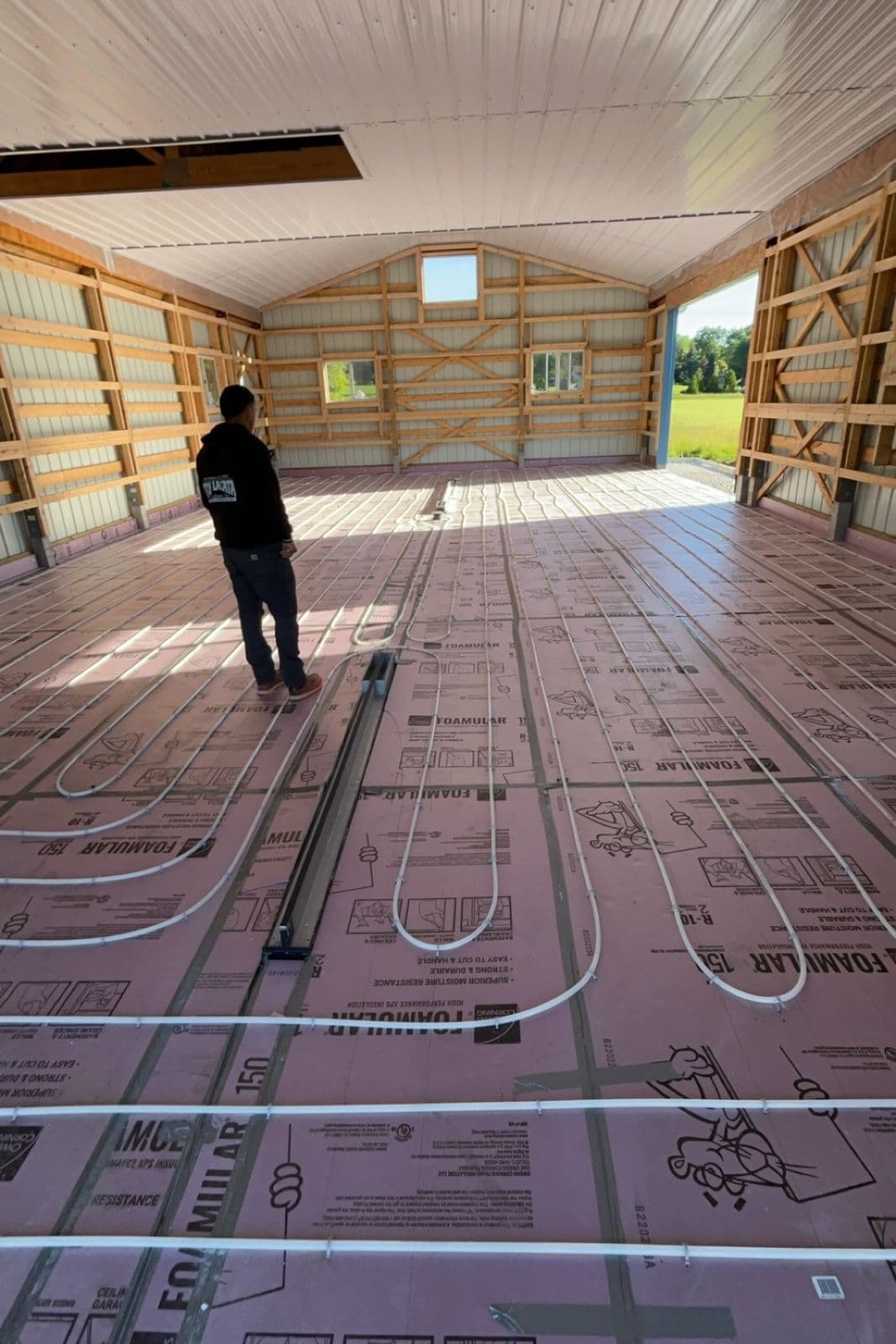
The same system in a garage floor keeps the slab above freezing, so a car brought in wet dries out instead of leaving a sheet of ice across the floor, and the space stays usable in January without heating the air.
It pairs naturally with a heated apron and driveway, on one zoned system, so the vehicle never crosses an unheated surface between the road and the garage.
Who It Is For
Heated concrete earns its cost in three situations: a steep or shaded driveway that ices over and stays iced, a household where somebody should not be out with a shovel, and a property where a fall is a genuine risk rather than an inconvenience.
It also protects the concrete. A heated slab needs no de-icing salt and no plow scraping across it, which are the two things that take the surface off an ordinary driveway.
It is a premium system and we will not pretend otherwise. If it is not right for your property we will say so at the estimate rather than sell it to you.
Residential & Commercial
The same approach scales to commercial approaches, loading areas and entrances, where the alternative is somebody salting a surface every morning and the liability of a fall on it.
If you are considering it for a commercial property, call and describe the area and how it is used. It is a specification conversation more than a quote.
Heated Concrete: what homeowners ask
- Can heated concrete be added to my existing driveway?
- No. The tubing goes inside the slab, so it has to be installed before the pour. Adding it to an existing driveway means removing that driveway and pouring a new one. If you are replacing a driveway anyway, that is the moment to decide, because the incremental cost then is far lower than doing it as its own project later.
- What does it cost to run?
- It runs on a boiler and only when it is called for, and zoning means you heat the area that needs it rather than everything at once. Running cost depends on the area, the system and how aggressively you set it. We will walk through the specification with you rather than quote a number that will not match your property.
- Does it melt snow completely or just keep ice off?
- Through typical snowfall it melts as it lands and the surface stays clear. Through a heavy storm you may still clear the bulk of it, but you are clearing wet snow off a warm slab rather than chipping ice off a cold one, and nothing bonds to the surface.
- Does the tubing weaken the slab?
- No. It sits within the slab section alongside the reinforcement, and the concrete is specified for it. A heated slab often outlasts an unheated one, because it never sees de-icing salt or a plow blade.
- Can I heat just part of the driveway?
- Yes, and that is often the sensible version. Heating the apron, the walk and the section by the door covers where people actually walk and where ice is most dangerous, at a fraction of heating the whole surface.
- What happens if the tubing ever fails?
- The tubing used for this is rated for decades in a slab and the failure points in practice are at the manifold and the boiler, both of which are accessible and serviceable. The system is pressure-tested before the pour and stays under pressure during it, so a problem shows up while the concrete can still be worked.
Get a real number on your job.
We walk the site, measure it, and put the price in writing. No charge, and no pressure to book on the spot.