Concrete Removal & Replacement in Southeastern Wisconsin
Replacement is about a third of our workload, which means we spend a lot of time looking at what other people poured. The pattern almost never changes: the concrete did not fail, the thing underneath it did. Too thin, no reinforcement, a base nobody compacted, or water that was never given anywhere to go.
That matters because it decides what you should buy. Replacing a slab without fixing what moved it is paying full price to start the same clock again.
Repair or Replace
Some of this is genuinely repairable and we will say so. What tips it to replacement is usually one of seven things, and most failing slabs have several at once.
Cracks that have gone from hairline to wide, or that have started intersecting across the slab. Sections that have settled out of plane with each other. Spalling, where the surface flakes away after years of freeze-thaw and de-icing salt. Water that stands instead of draining. Patches that have already been done and already failed. A slab old enough that it is showing all of the above at once. And the honest one: you are redoing the exterior anyway and the concrete is what is letting it down.
One or two of those on an otherwise sound slab is a repair conversation. Four of them is a slab telling you the base is gone.
Tear-Out & Haul Away
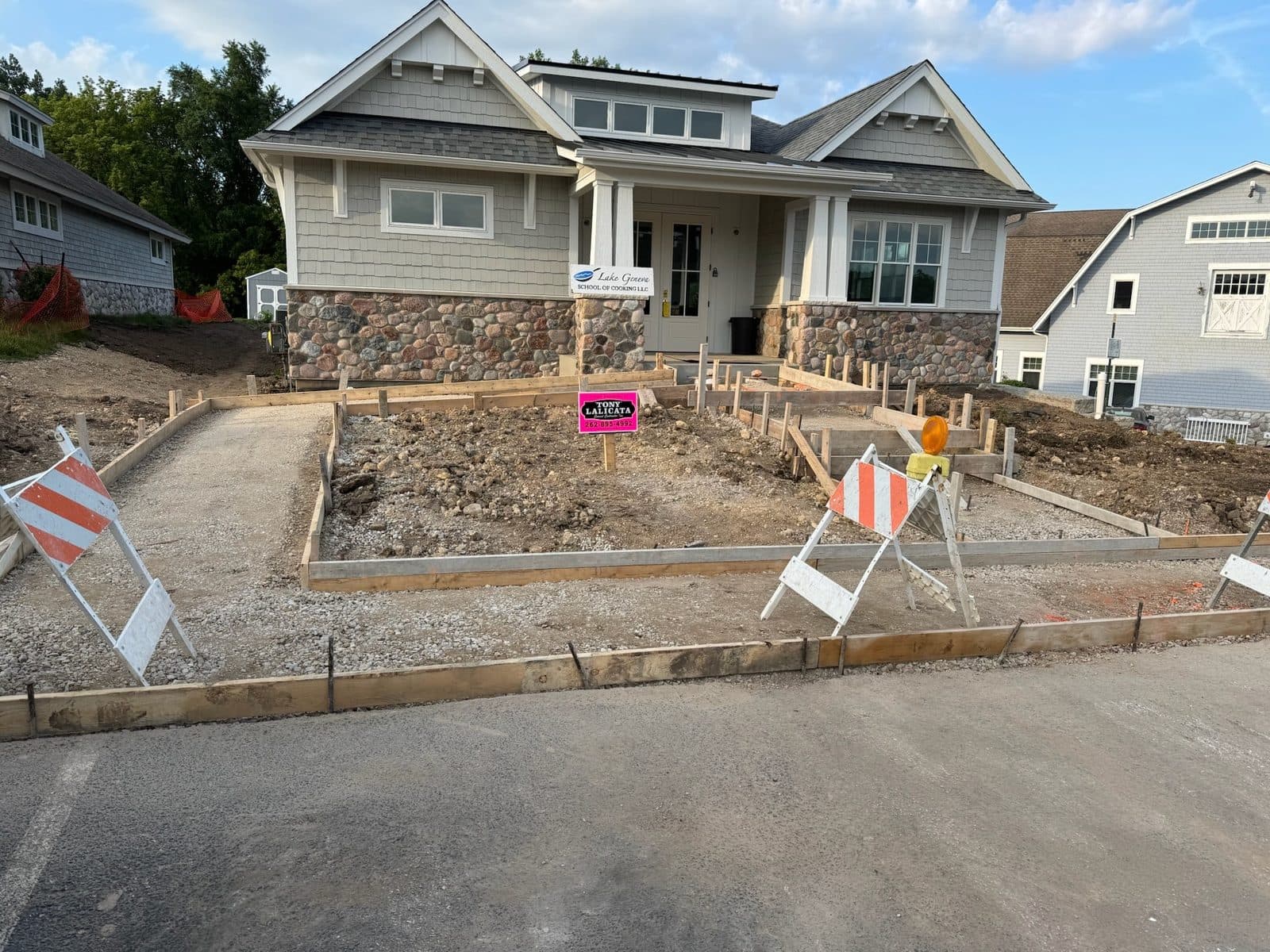
We break out the old concrete, load it, and take it away. The site gets left clean, and we protect the lawn and the apron on the way in and out rather than leaving you with ruts to sort out afterward.
Tear-out is also the diagnostic. Once the slab is off we can see the subgrade, and that is when we know whether we are looking at a base that needs recompacting, a drainage problem that needs a grade change, or soft fill that has to come out. If we find something that changes the job, you hear about it that day, standing there, before anything gets poured over it.
Freeze-Thaw Crack Replacement
Southeastern Wisconsin runs dozens of freeze-thaw cycles a year. Water gets into concrete, freezes, expands and pushes the surface apart from the inside, and every cycle makes the next one easier. Add rock salt and it accelerates.
The replacement is where you fix that properly: air-entrained concrete so the expanding water has somewhere to go, grade that moves water off the slab instead of holding it, and joints placed so the slab can move without tearing. Then no de-icing salt the first winter, and sand after that.
The Repour
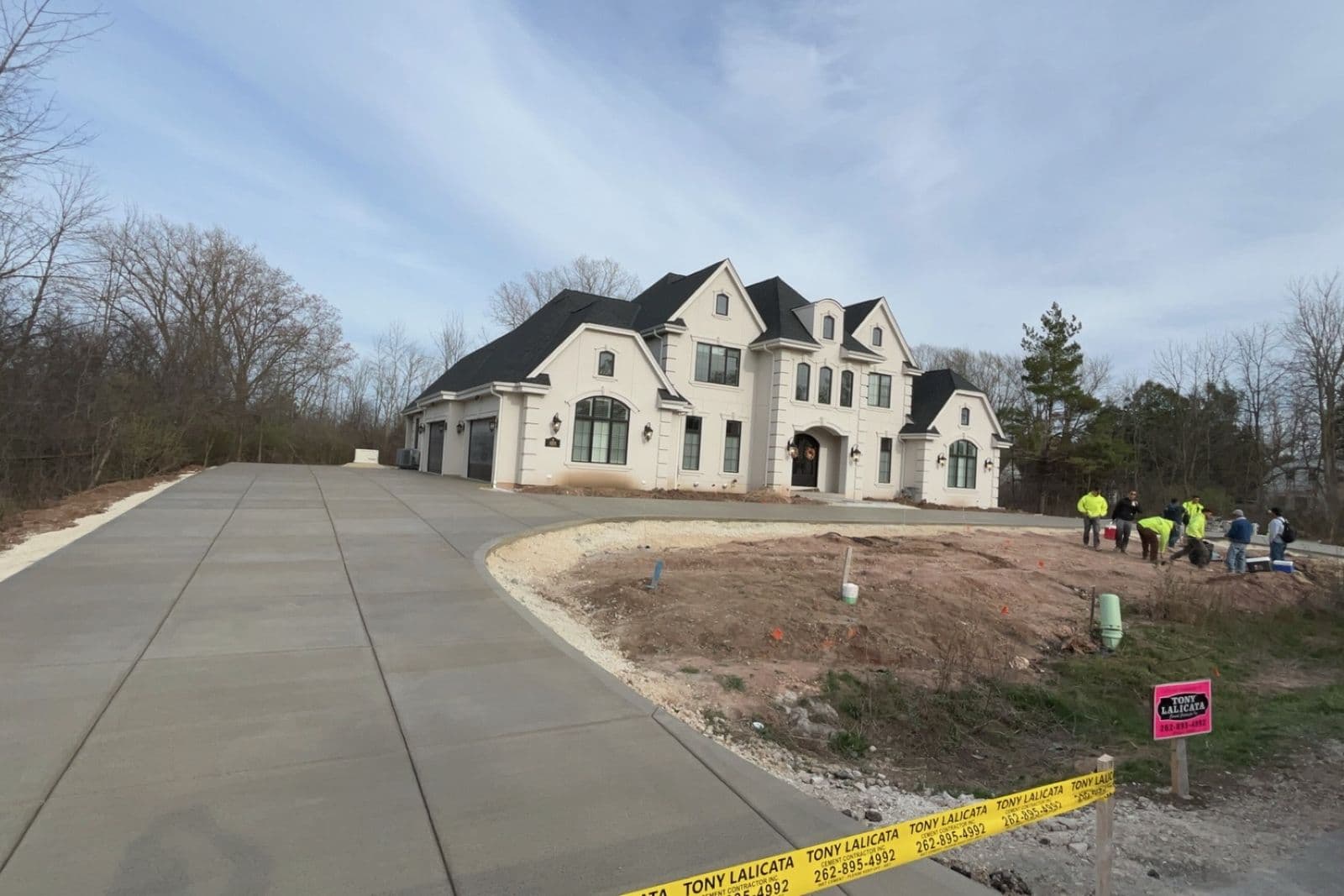
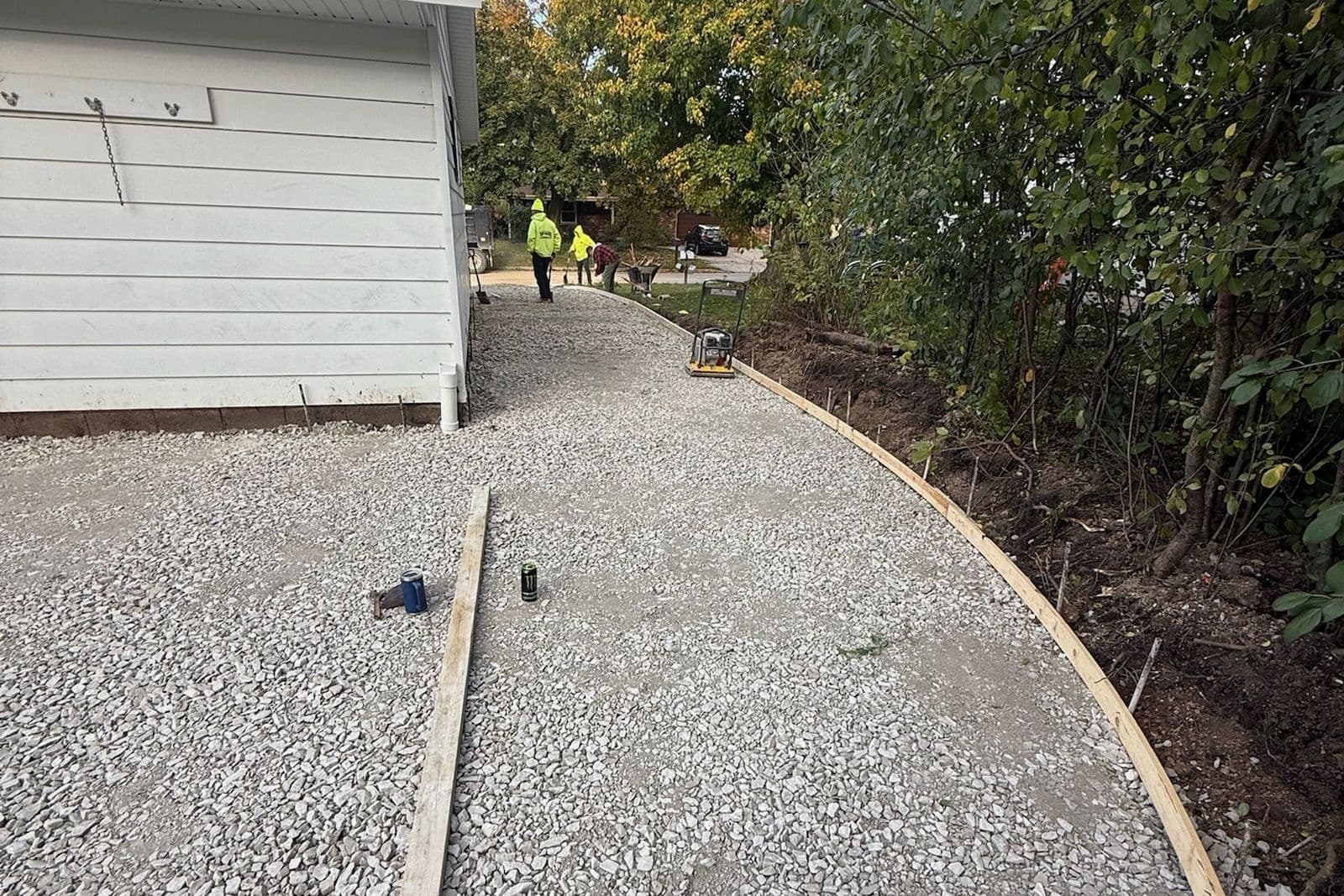
New base compacted, drainage corrected, reinforcement in, forms set, joints planned before the truck arrives. Thickened where vehicles turn or where a delivery truck will sit. Finished to match whatever it ties into, so a replaced section does not read as a patch.
It is the same work as a new pour with one advantage: we already know exactly how the last slab failed, which tells us what this one has to do differently.
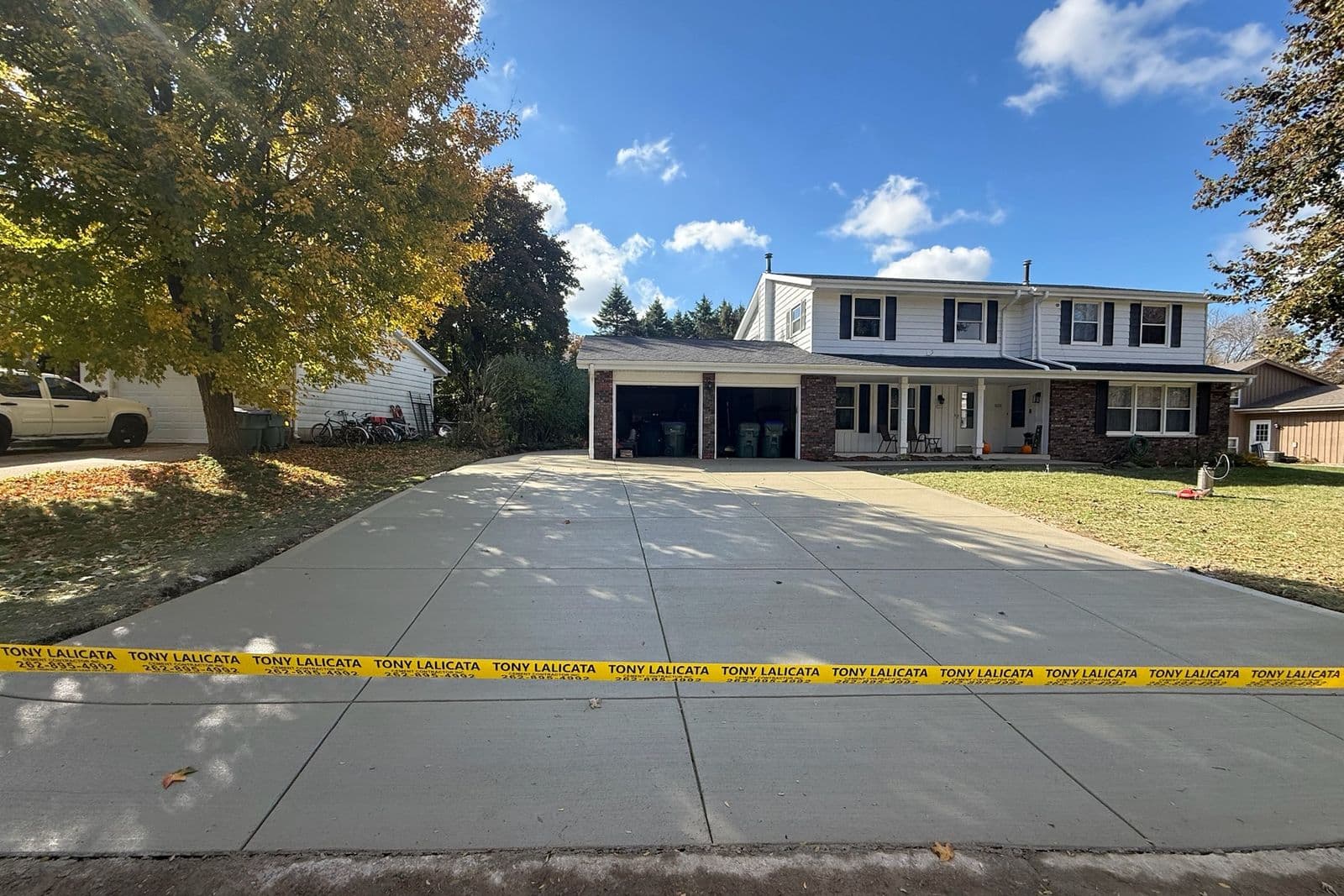
Concrete Removal & Replacement: what homeowners ask
- Can you pour new concrete over the old slab?
- No. An overlay traps whatever is failing underneath and puts a thin unbonded layer on top of it, and it will telegraph the old cracks within a couple of winters. If the slab is done, it comes out. Anyone offering to pour over it is selling you the cheap version of a job you will pay for twice.
- How do I know if it is the base or just the concrete?
- Settlement and slabs sitting out of plane with each other point at the base. Surface spalling with the slab still level points at the concrete or at salt. Cracks that keep coming back after being patched point at the base every time. We can usually call it from a walk-through, and tear-out confirms it.
- Do you haul the old concrete away?
- Yes. Break out, load, haul and a clean site are part of the job, not a line item you find out about later. We protect the lawn and the apron on the way in and out.
- How long does a driveway replacement take?
- Usually two to three days on site: tear-out and base correction, then the pour, then joints and cleanup. Foot traffic at about 24 hours, cars at about seven days, heavy trucks after 28.
- Is replacing cheaper than repeated repairs?
- Once you are on the third patch, almost always. Patching treats the symptom on the surface while the cause stays under it, so the interval between repairs keeps shortening. We will still tell you when a repair is the right call, because sending you a bill for a slab that had five good years left is not how we have stayed in business since 1965.
- Will the new section match the rest of my concrete?
- It will match in finish and joint layout. It will not match in color at first, because new concrete is lighter than weathered concrete and takes a season or two to catch up. Anyone who tells you a fresh pour will blend invisibly on day one is guessing.
Get a real number on your job.
We walk the site, measure it, and put the price in writing. No charge, and no pressure to book on the spot.