
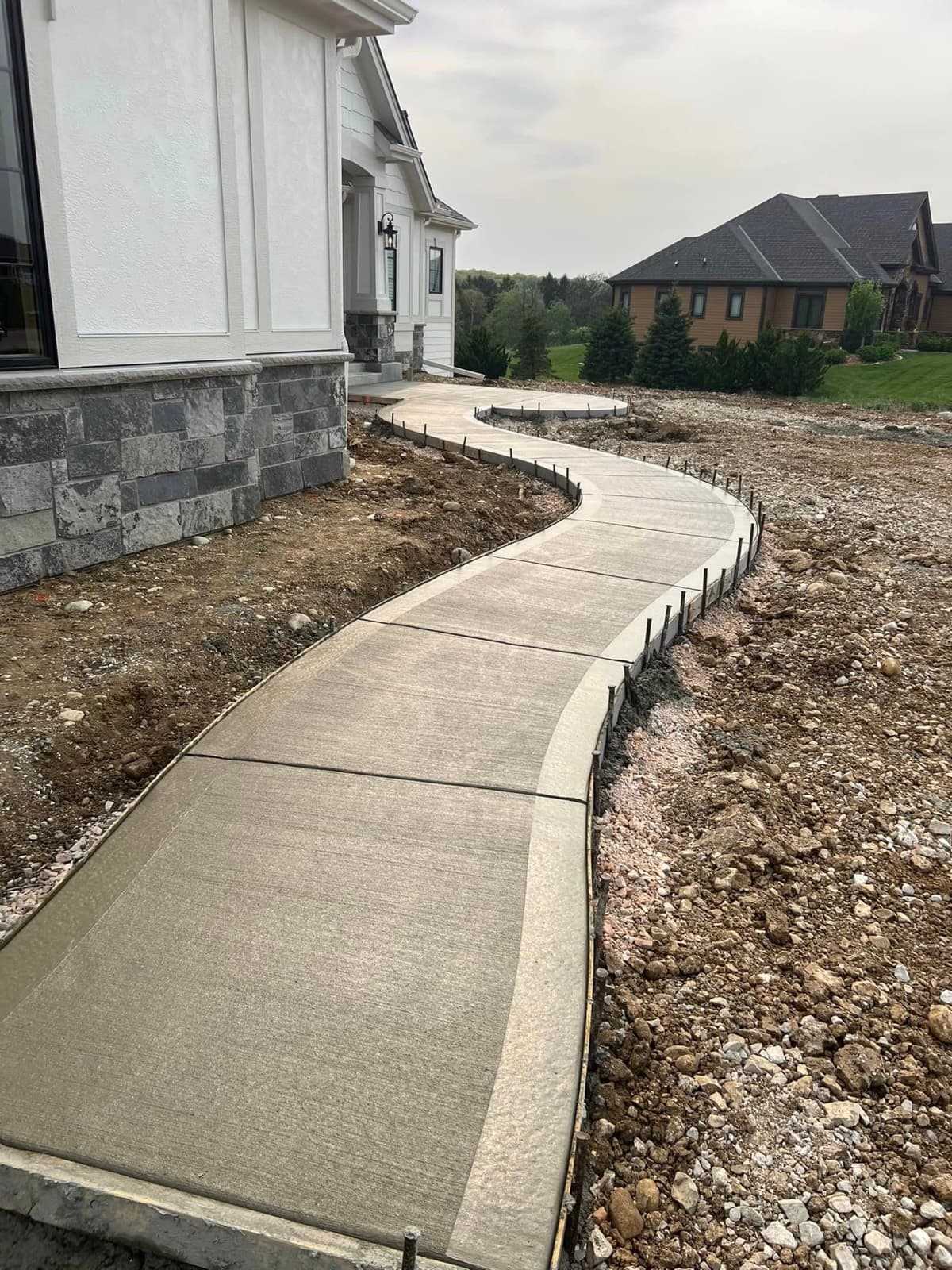
Concrete Sidewalks & Walkways in Muskego & Greater Milwaukee
A walkway is the piece of concrete everyone actually touches. People walk it in the dark, in the rain, and in February with their arms full. It is also the first thing a visitor sees up close, which is why a cracked, heaved front walk undoes a lot of work everywhere else on the property.
We have been pouring walks, entries and public sidewalk across Muskego and Greater Milwaukee since 1965, with Tony or Nino overseeing the work. The work is less glamorous than a stamped patio and it is held to exactly the same standard.
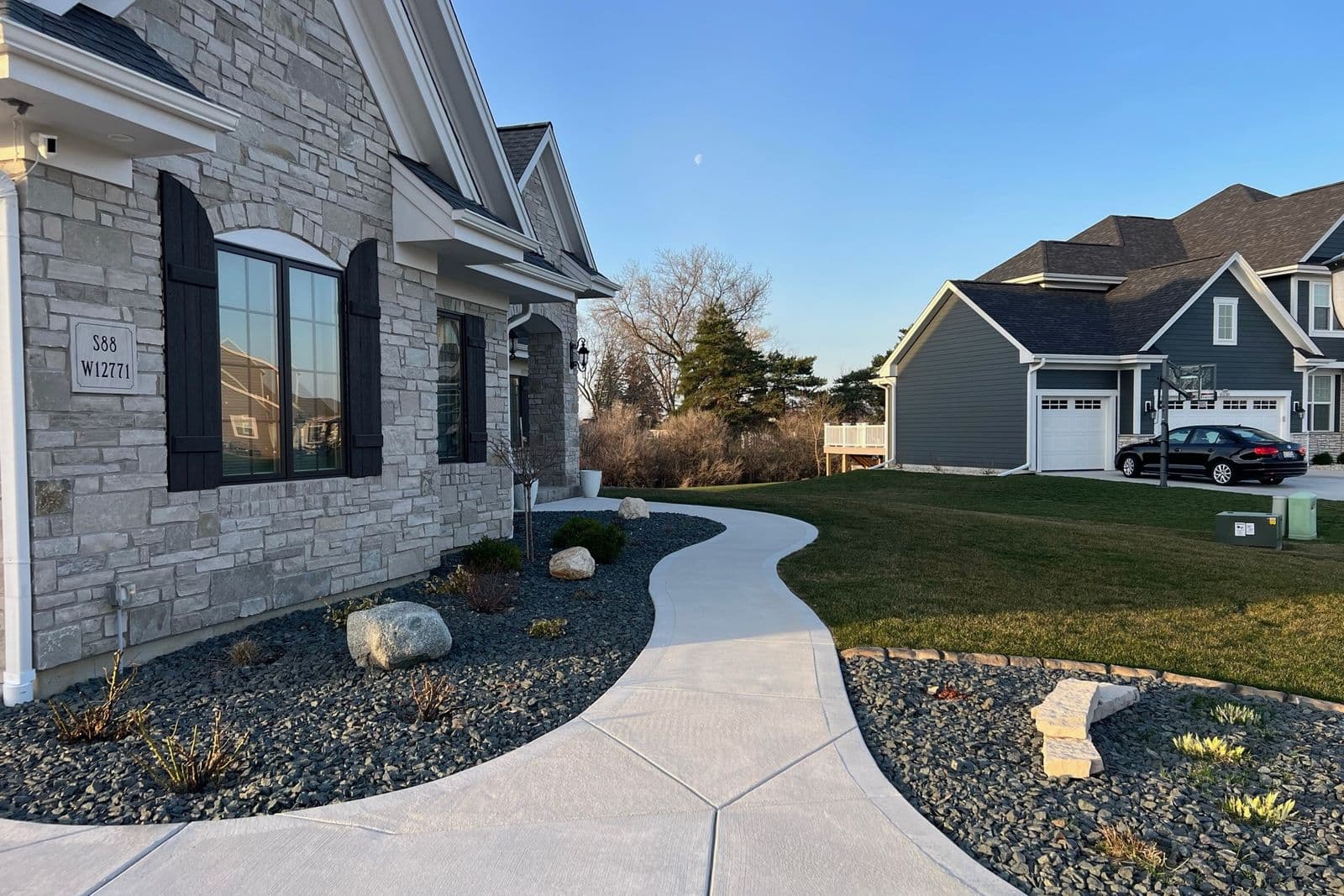
Sidewalk & Walkway Installation
Most residential walks run four inches thick over a compacted stone base, wide enough for two people side by side rather than the narrow ribbon a lot of houses were built with. Width is worth spending money on: a 36-inch walk feels like a path and a 48-inch walk feels like an entrance, and the concrete between those two numbers costs very little.
Control joints go in at spacing matched to the width, and the walk is pitched to shed water off the surface rather than hold it. Standing water on a walk is not just a puddle. It is the thing that freezes, gets walked on, and takes the surface apart over a few winters.
Where a walk meets a stoop, a driveway or a public sidewalk, the transition has to be flush. A lip at a joint is the single most common trip hazard on a residential property, and it is entirely avoidable at pour time.
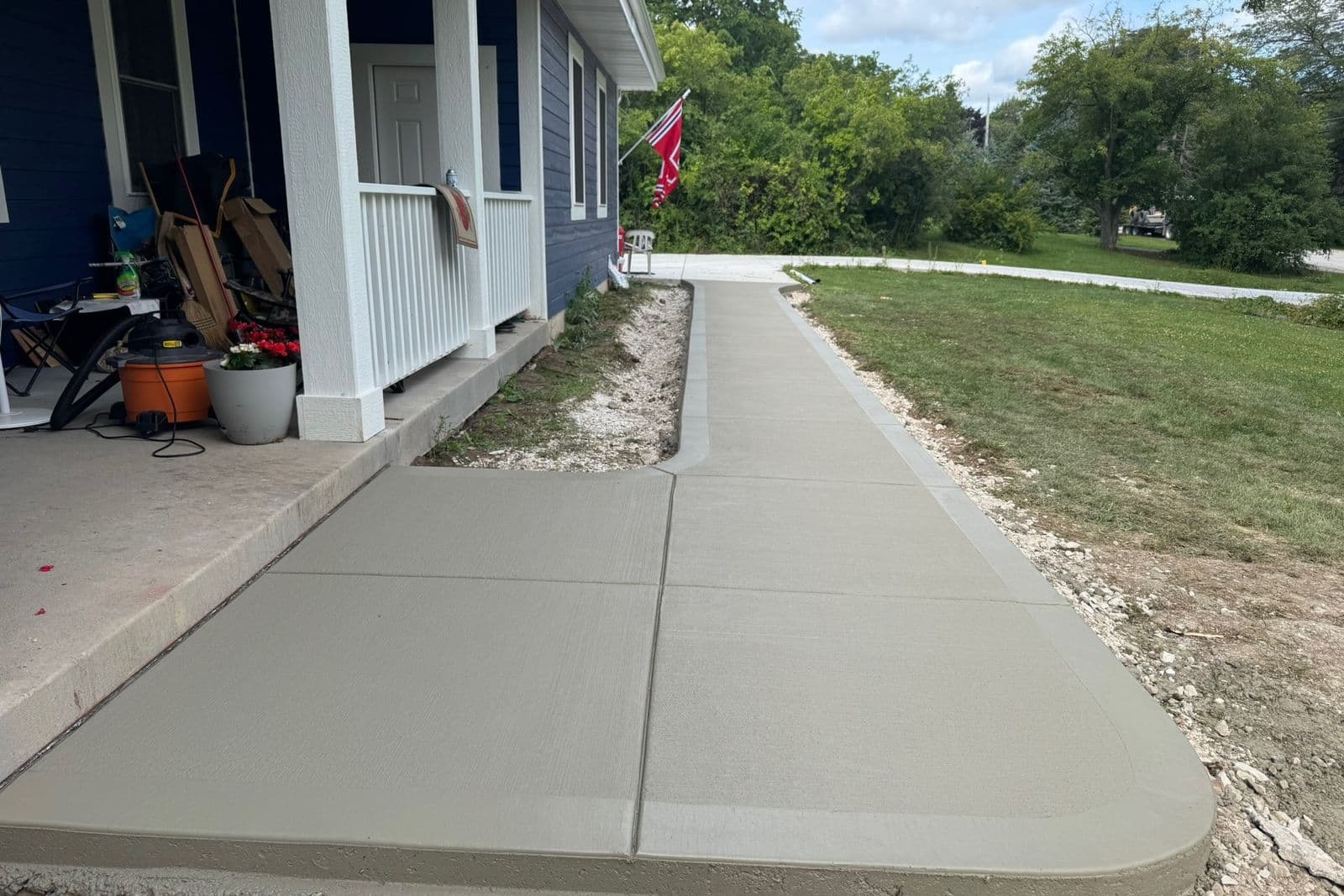
Replacing a Failing Walk
Walks fail in ways driveways do not. Tree roots lift them, downspouts undercut them, and the panel by the stoop settles first because that is where the backfill is deepest and least compacted. The result is a walk that has gone out of plane panel by panel.
Grinding a lifted edge buys you a season and leaves you with a walk that is still moving. We take out the failed panels, deal with whatever moved them, and repour to match the run. If a root did it, the root gets addressed. Otherwise you are paying to put concrete back in the same place it already failed once.
Safety & Accessibility
Even surfaces and consistent step heights are what keep a walk usable for someone with a cane, a stroller or an armload of groceries. Inconsistent risers are the thing people actually catch a toe on, because the body learns the first step and expects the rest to match.
Curb Appeal
A broom finish is the standard and it is the right call for anything you walk on in winter, because the texture is what gives you grip. From there, a stamped border, an exposed aggregate band or a colored edge ties the walk to the driveway and the entry so the property reads as designed rather than assembled a piece at a time.
It is a small upgrade on a small pour, and it is the one people comment on, because it is at eye level and three feet away.
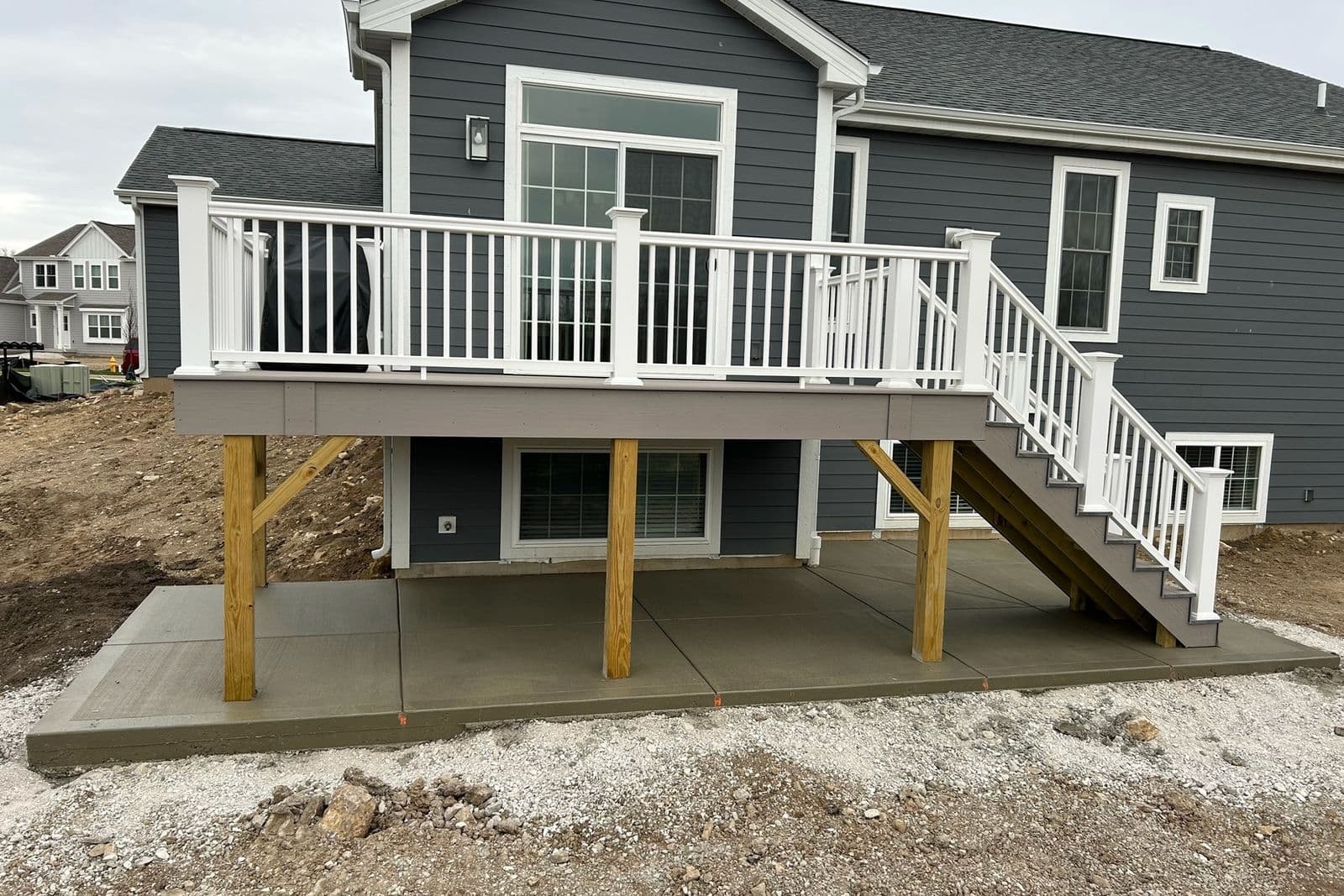
Sidewalks & Walkways: what homeowners ask
- How wide should a front walkway be?
- Forty-eight inches if the space allows, so two people can walk it side by side. Thirty-six is the practical minimum and it reads as a path rather than an entrance. The extra foot of width is one of the cheapest upgrades on the whole job, because the base and the labor are already there.
- My sidewalk has lifted at one joint. Can it be ground down?
- Grinding removes the trip hazard without touching what caused it, so you get a season or two before the panel keeps moving. If a tree root or a settled base lifted it, that is what needs dealing with. We will tell you honestly whether you are looking at one panel or a run.
- How long before I can walk on a new sidewalk?
- About 24 hours for foot traffic. Keep it clear of vehicles for a week and heavy equipment for 28 days. If a walk crosses somewhere a truck will drive, tell us at the estimate and we will thicken it rather than let it crack.
- Can a walkway match my driveway?
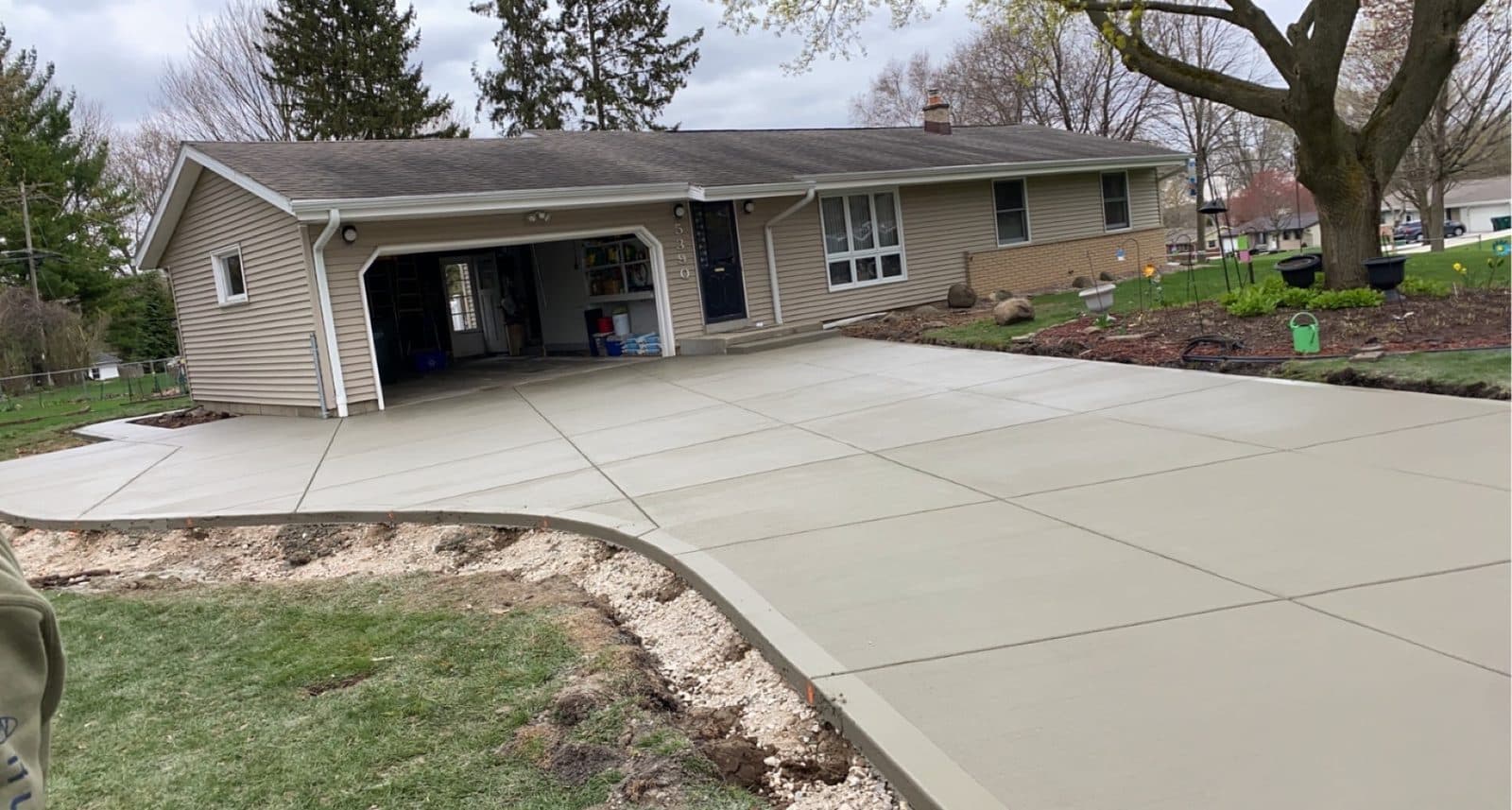
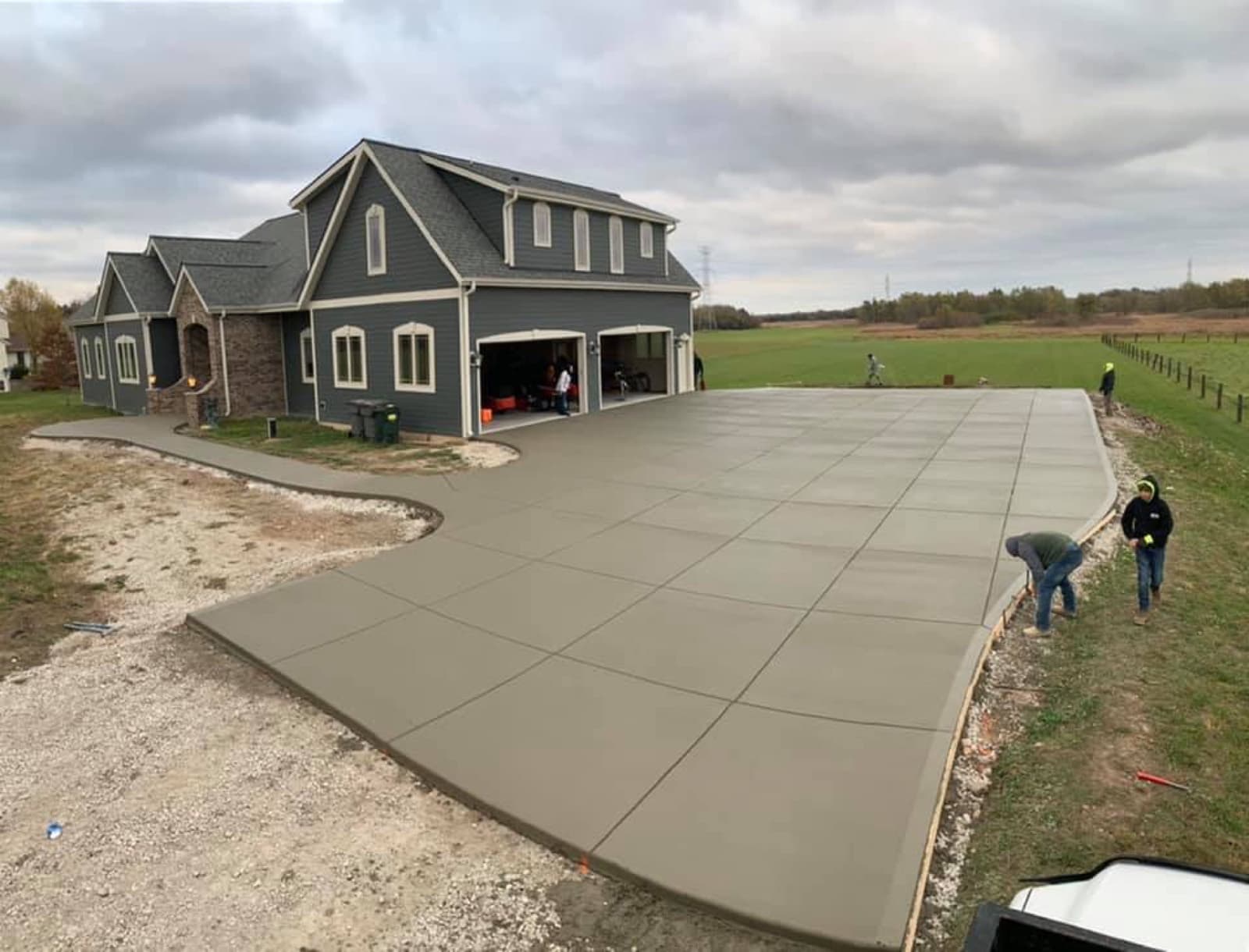
- Yes, and it should. Same finish, same color, borders carried across, joints lined up where they meet. Matching them is mostly a matter of deciding it before the pour rather than after.
Get a real number on your job.
We walk the site, measure it, and put the price in writing. No charge, and no pressure to book on the spot.