
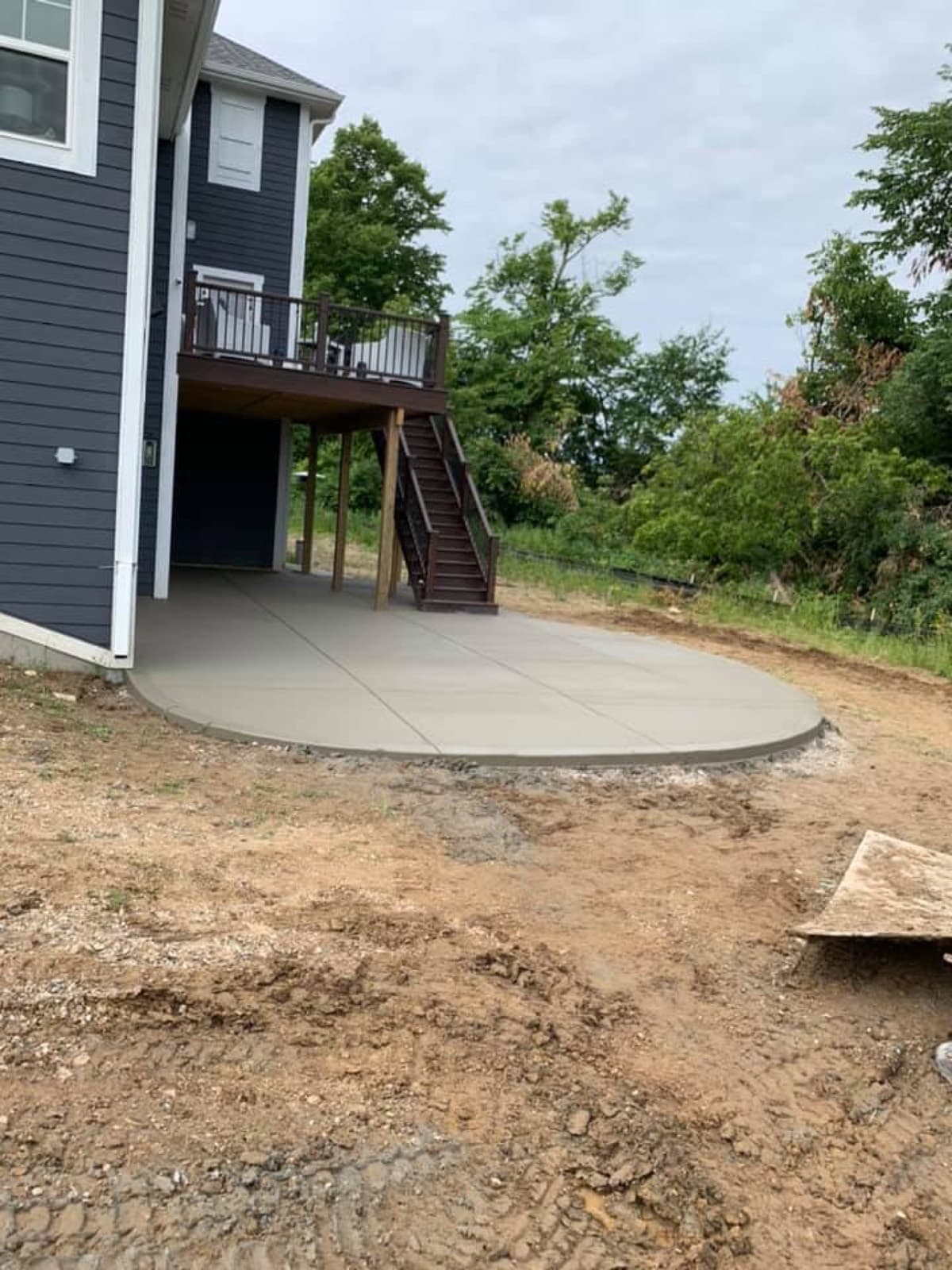
Concrete Patios in Muskego & Greater Milwaukee
A patio is the one piece of concrete on a property that people sit on. That changes what matters about it. Size and shape have to suit how the space actually gets used, the surface has to stay comfortable underfoot, and the edge has to look deliberate, because you see it from the kitchen window every day of the year.
We have been pouring patios across Greater Milwaukee since 1965, and decorative work is one of the things this company is known for. Either Tony or Nino oversees the project.
Patio Installation
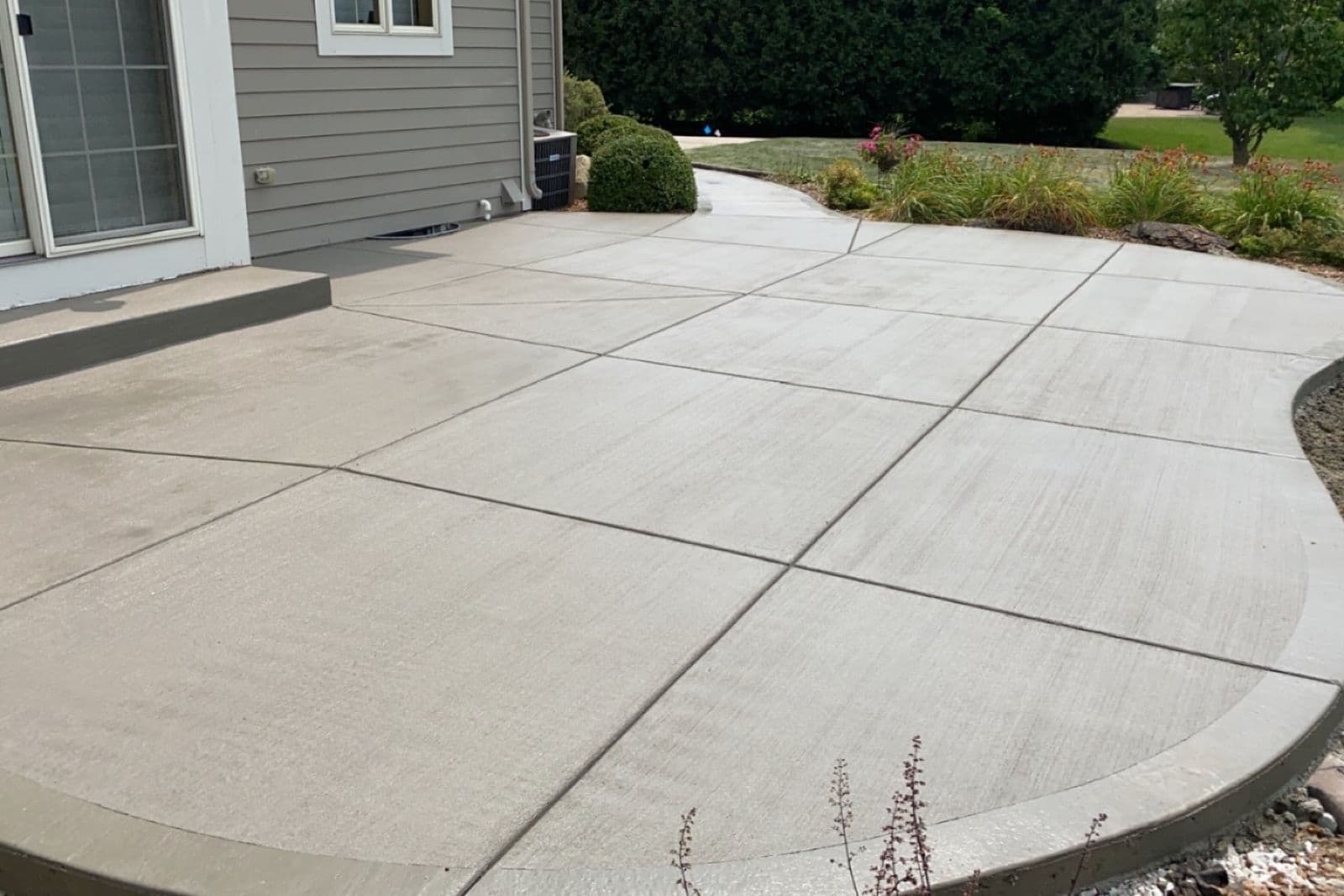
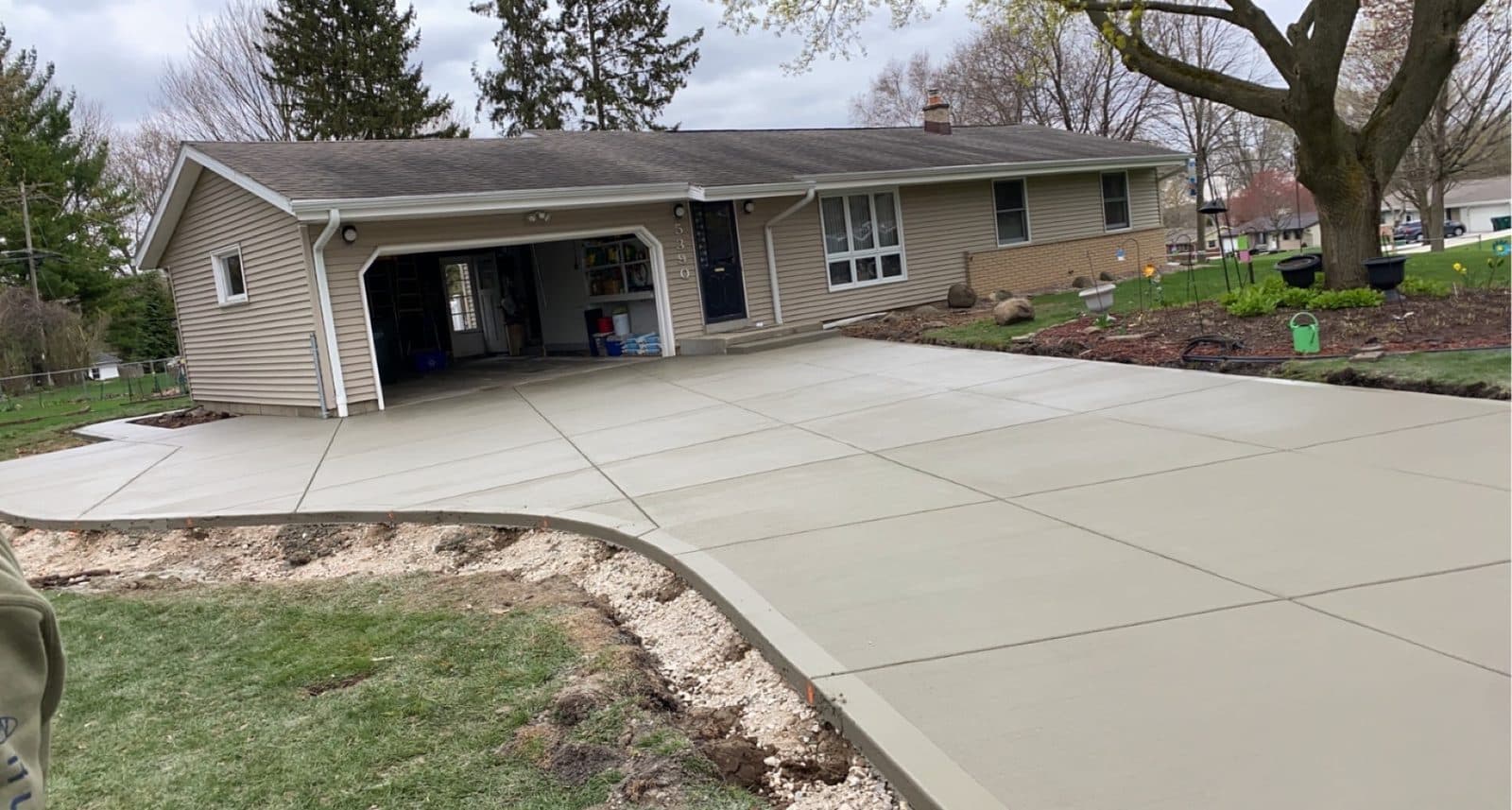
Most patios run four inches over a compacted stone base, pitched away from the house so water leaves the surface and does not sit against the foundation. That pitch is small enough that nobody notices it and important enough that skipping it puts water where you least want it.
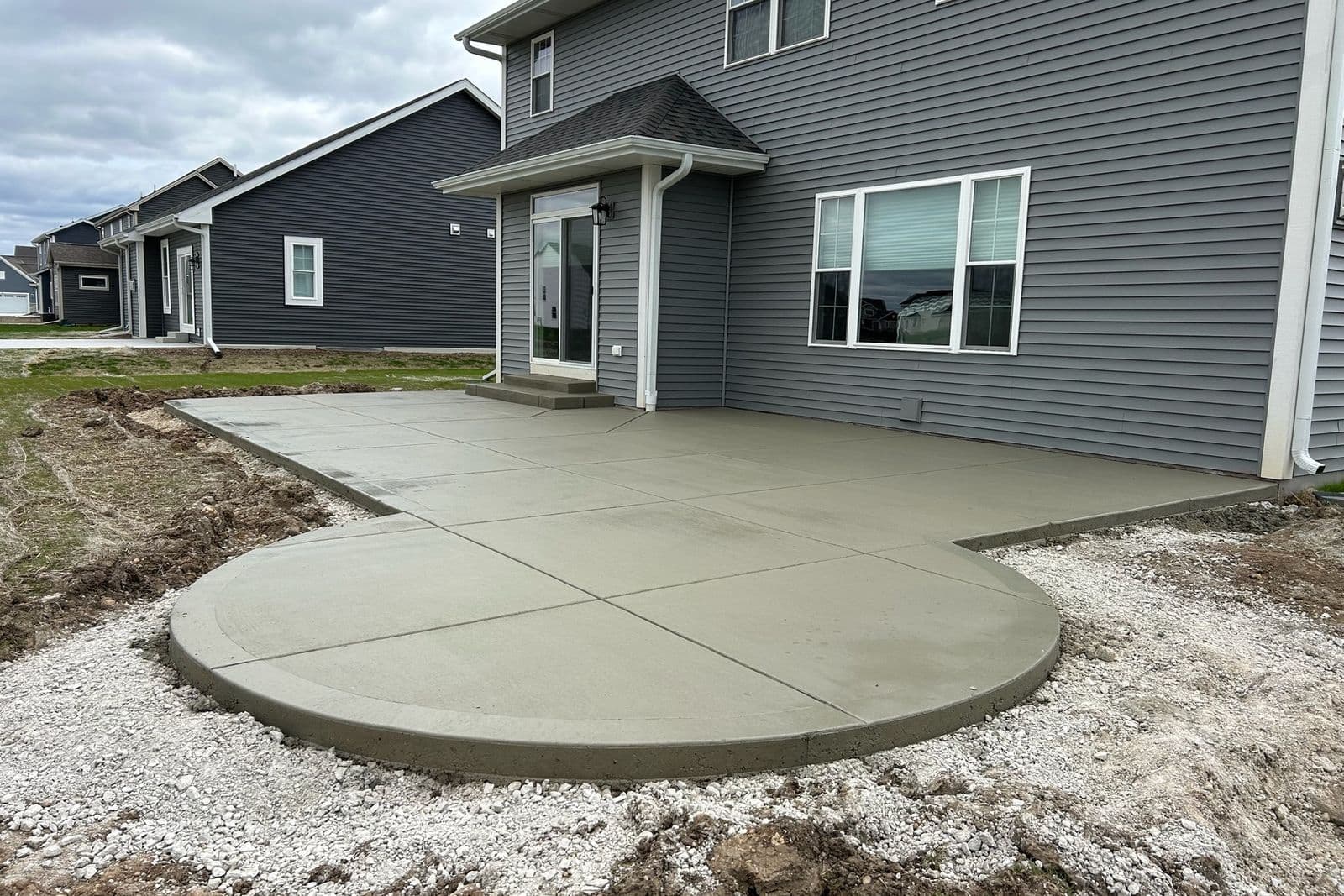
Size it to the furniture, not to the drawing. A table with chairs that pull out needs more room than people expect, and the most common regret we hear is a patio that came out a foot too small on every side. It is far cheaper to add that foot before the pour than to butt a second slab against it later.
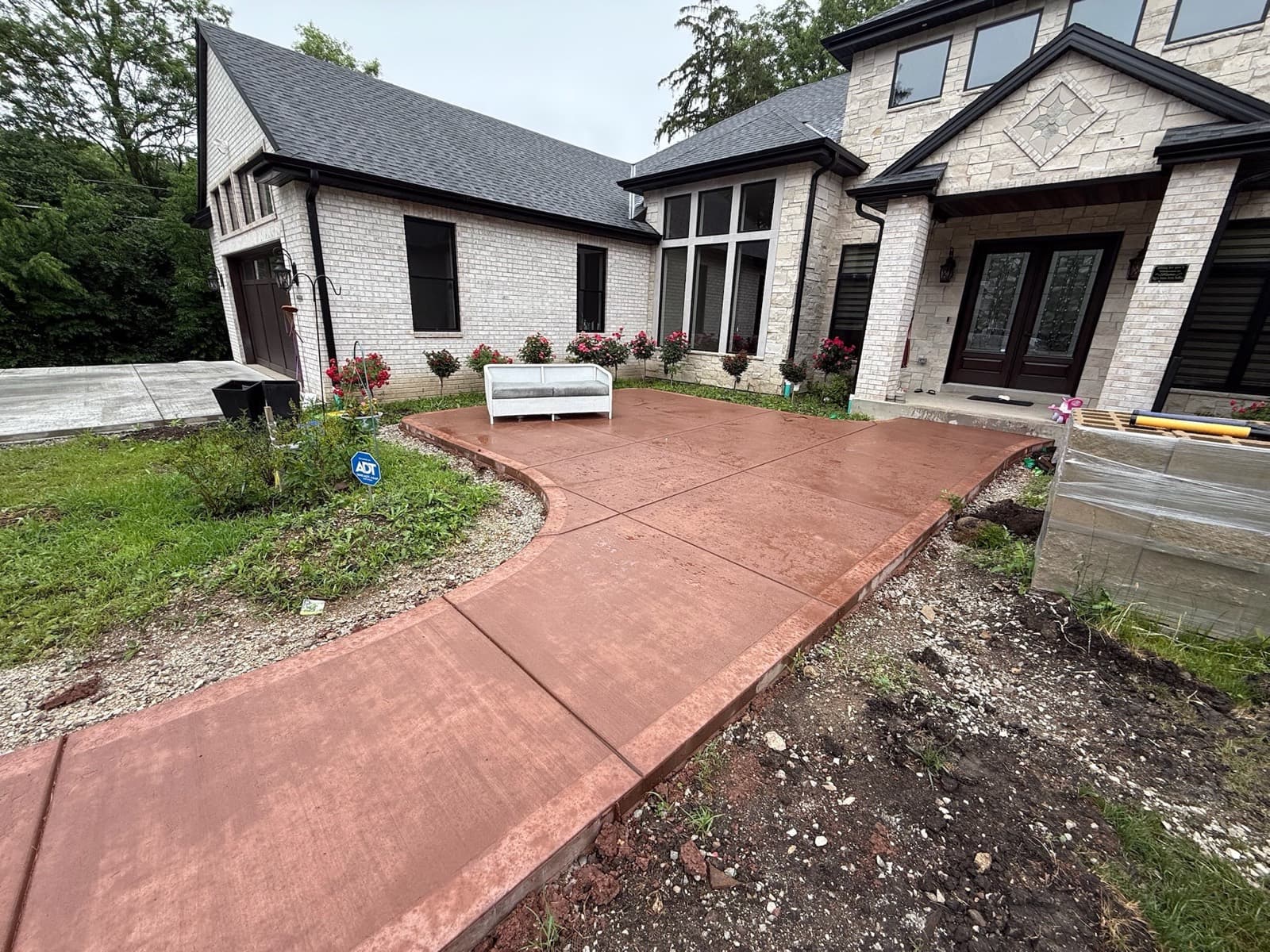
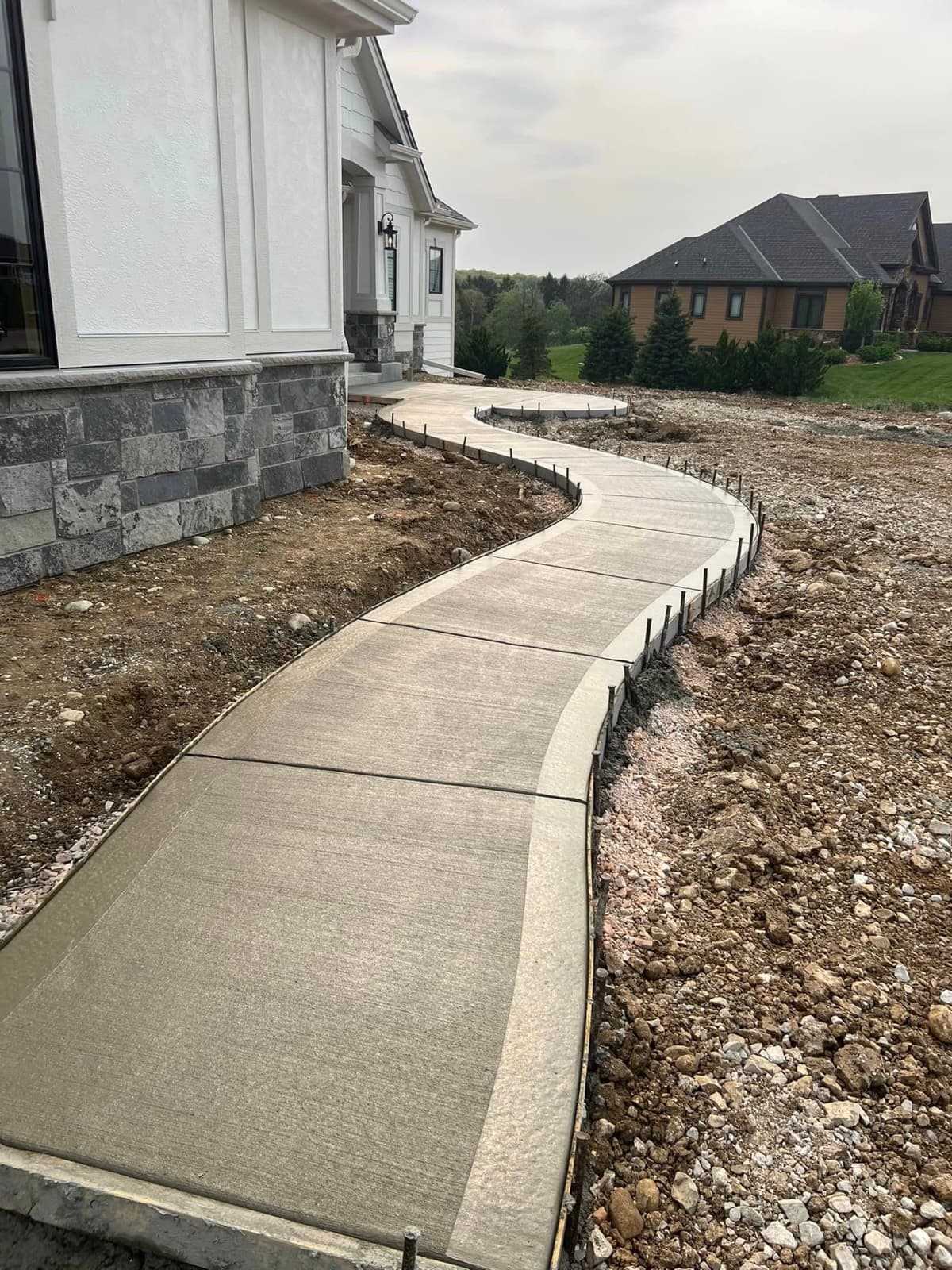
Shape is free. A curved edge costs the same as a straight one because the forms bend either way, and it usually sits better against a lawn or a planting bed.
Design Options
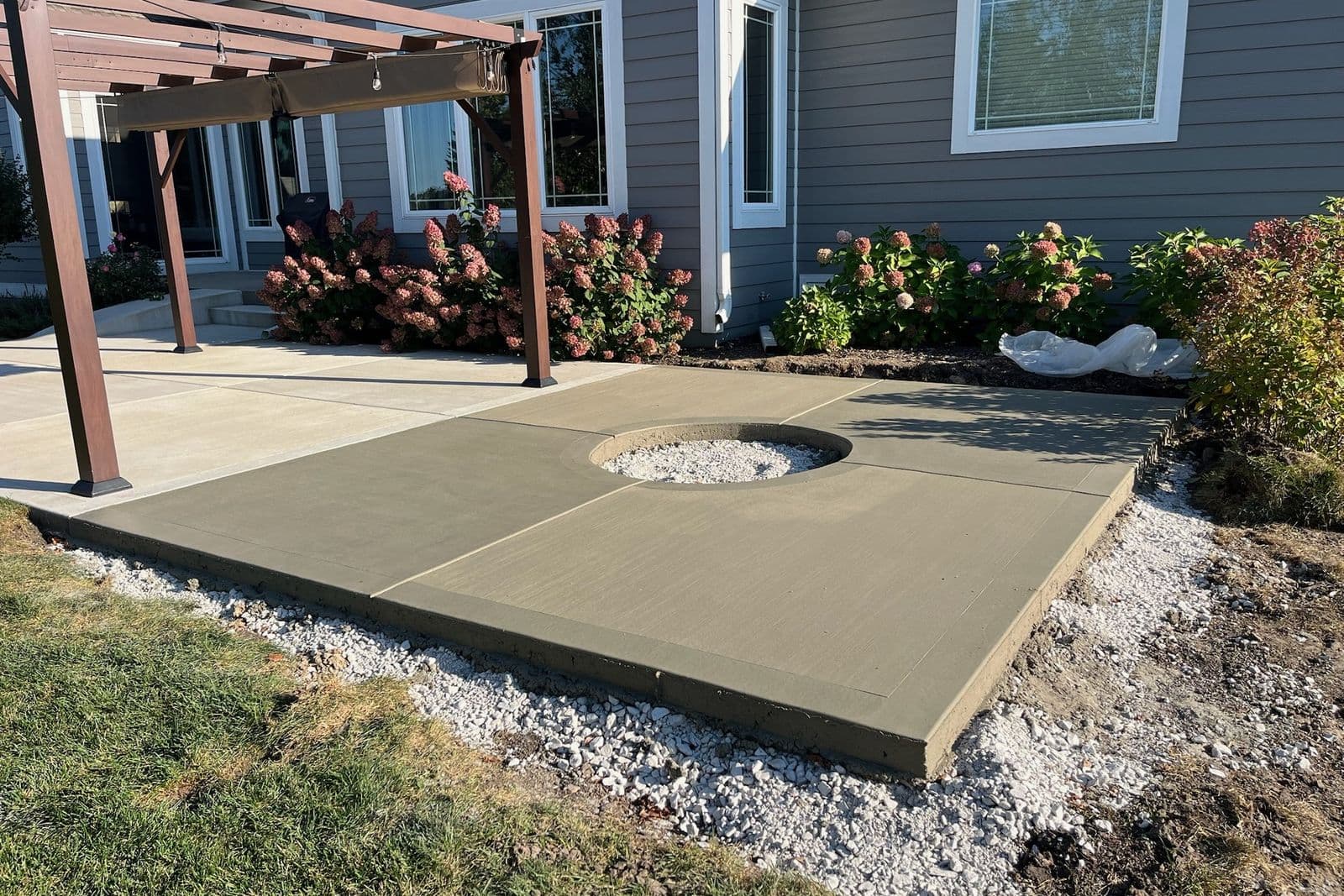
A broom finish is the standard and it wears well. From there the range is wide: integral color to move the slab off gray, a stamped border framing a plain field, a full stamped surface in a stone or slate pattern, or exposed aggregate for texture.
The upgrade most people are happiest with is a border rather than a full stamp. It frames the space, ties the patio to the walkway and the house, and costs a fraction of stamping the whole surface. We will lay the options out against your house at the estimate rather than handing you a brochure.
Built for Wisconsin Freeze-Thaw
A patio takes the same freeze-thaw beating as a driveway and gets less attention, because nobody is driving on it and small problems go unnoticed for longer. Air-entrained concrete on every exterior pour, drainage that moves water off the surface, and joints placed so the slab can move without tearing.
The one thing we ask: no de-icing salt on a patio, ever. A grill and a fire pit are fine. Salt on the steps that lead down to it is what takes the surface apart, and sand does the same job without the damage.
Concrete Patios: what homeowners ask
- How big should a concrete patio be?
- Size it to the furniture with room to move behind a pulled-out chair. A dining set wants more space than most people picture, and the regret we hear most often is a patio that finished a foot short on every side. Adding that foot before the pour is inexpensive; adding a second slab against it later never looks right.
- Concrete or pavers for a patio?
- Pavers cost more to install and can be lifted and reset if something settles. Poured concrete is one continuous surface with nothing to shift, nothing growing between joints, and less maintenance year to year. In this freeze-thaw climate a properly based slab tends to stay flat longer than a paver field does.
- Can a patio be stamped or colored?
- Yes, and this is work we are known for. Integral color, stamped patterns in stone or slate, decorative borders, exposed aggregate. The best value is usually a stamped border around a plain field: it frames the space and ties it to the house for a fraction of stamping the whole surface.
- Will a new patio crack?
- Every slab develops some cracking as it expands and contracts. Control joints decide where it happens, so it lands on a line that looks intentional instead of across the middle. Properly jointed and properly based, that is a cosmetic detail rather than a failure.
- When can I use a new patio?
- Walk on it after about 24 hours and put furniture on it after a week. Keep anything heavy off it for 28 days while it reaches full strength. If a pergola or a fire pit is going on it, tell us at the estimate so the footings get planned in.
Get a real number on your job.
We walk the site, measure it, and put the price in writing. No charge, and no pressure to book on the spot.