Commercial Concrete Contractor in Southeastern Wisconsin
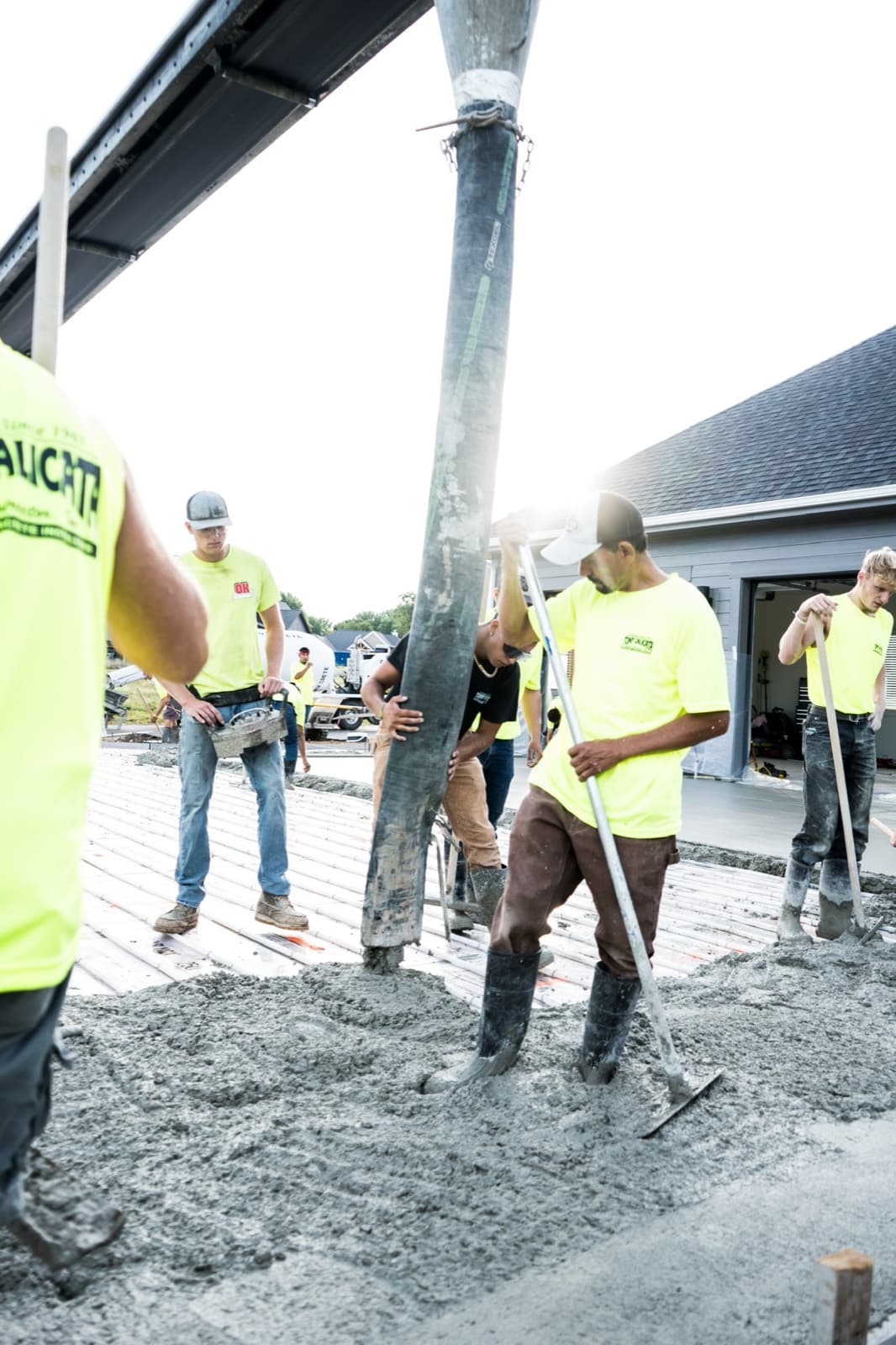
We have been pouring concrete in Southeastern Wisconsin since 1965, and a meaningful share of it is commercial: parking areas, approaches, loading docks, sidewalks, pads and foundations. Same family, same crew, same equipment as the residential work, at a different scale.
What a general contractor is buying from a concrete sub is not craftsmanship. It is the confidence that the pour happens on the date it is supposed to, that the sub shows up with the right crew and the right paperwork, and that nobody has to manage them. That is what this page is about.
Commercial Flatwork
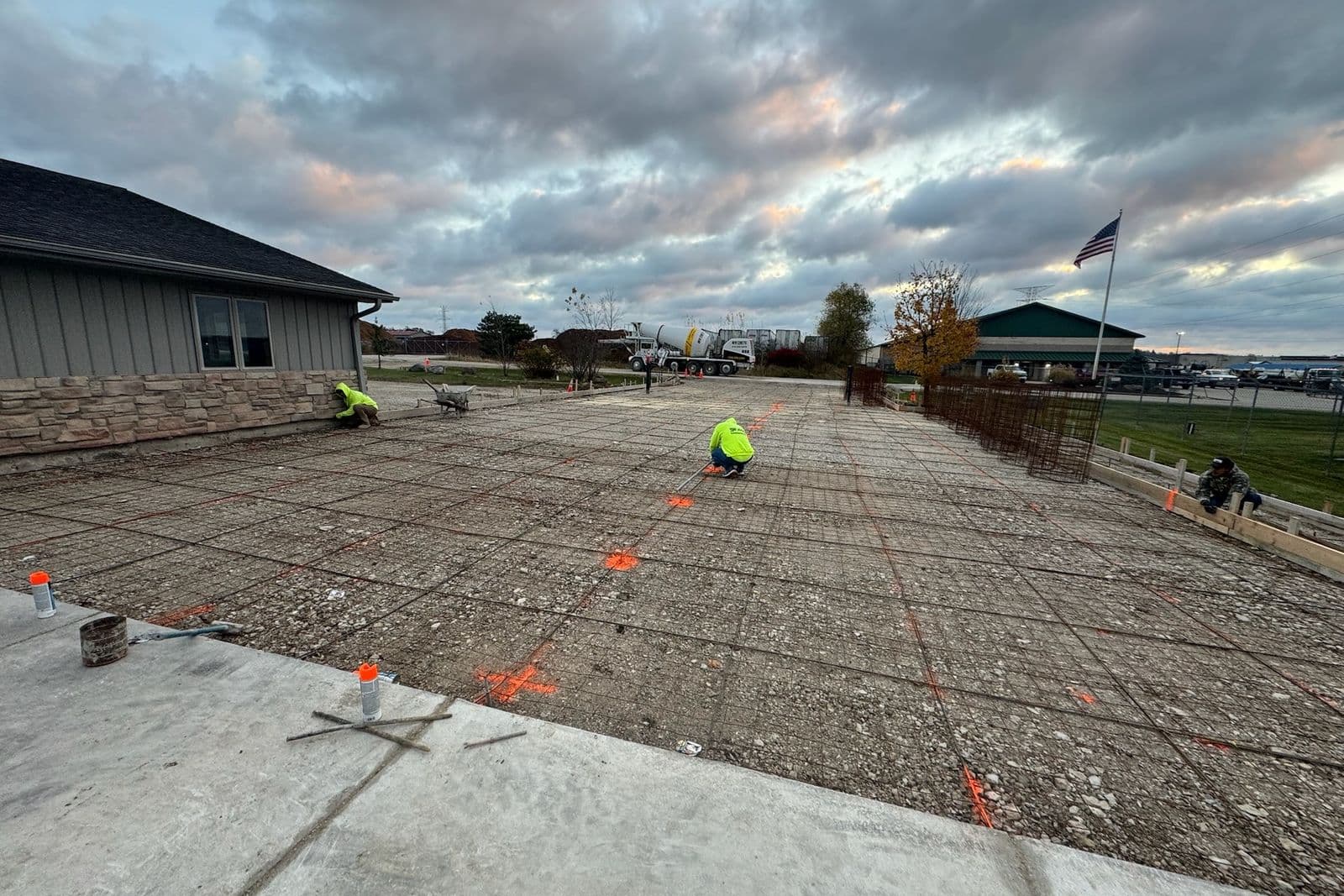
Sidewalks, aprons, approaches, equipment pads, dumpster enclosures and interior slabs. Specified thickness, specified mix, reinforcement to the drawings, and joint layout planned rather than improvised, because on a commercial slab the joints are as much a spec item as the strength is.
We work off the plans and we flag conflicts before the pour rather than after. If a detail will not build as drawn, the time to have that conversation is at submittal.
Parking Areas & Approaches
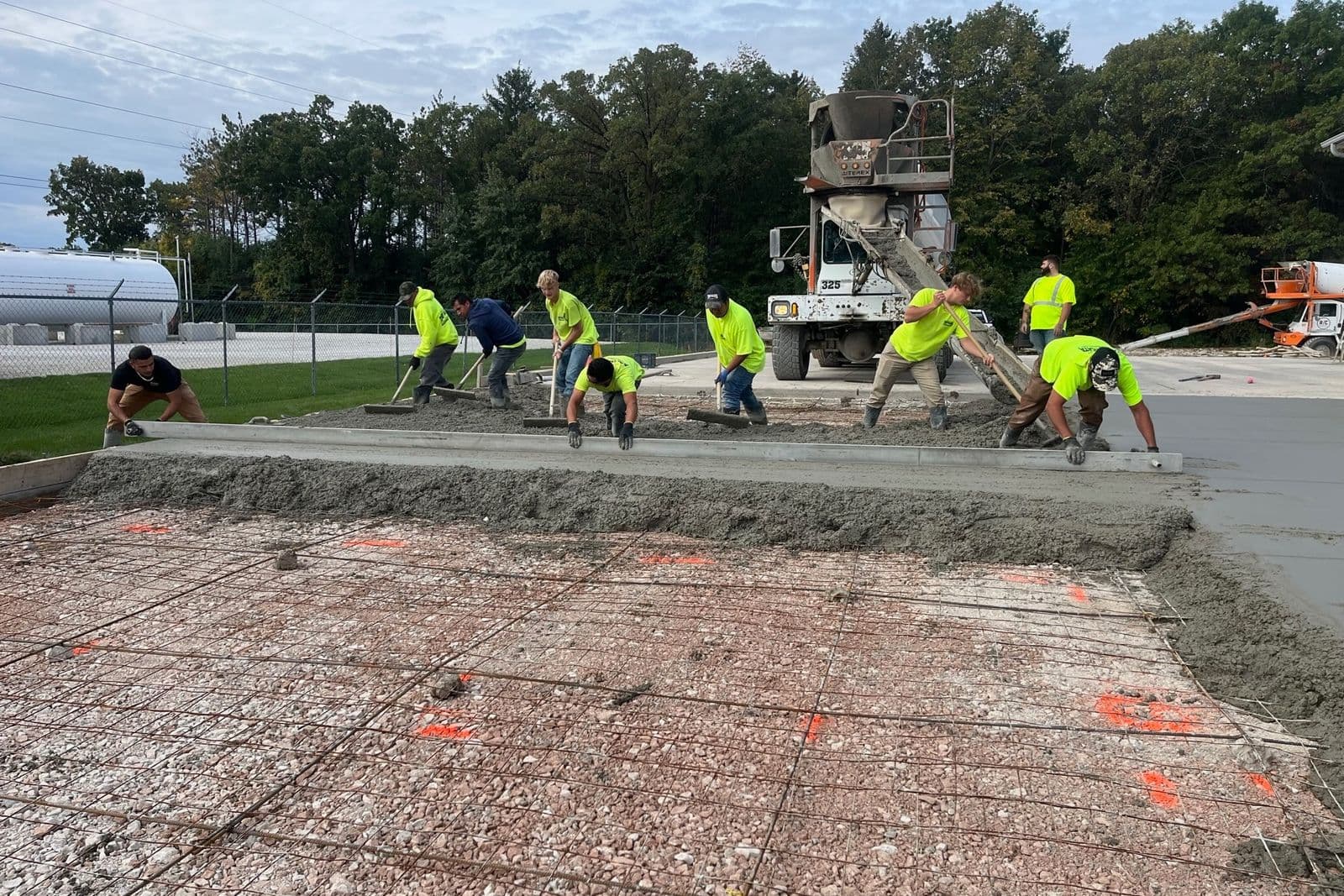
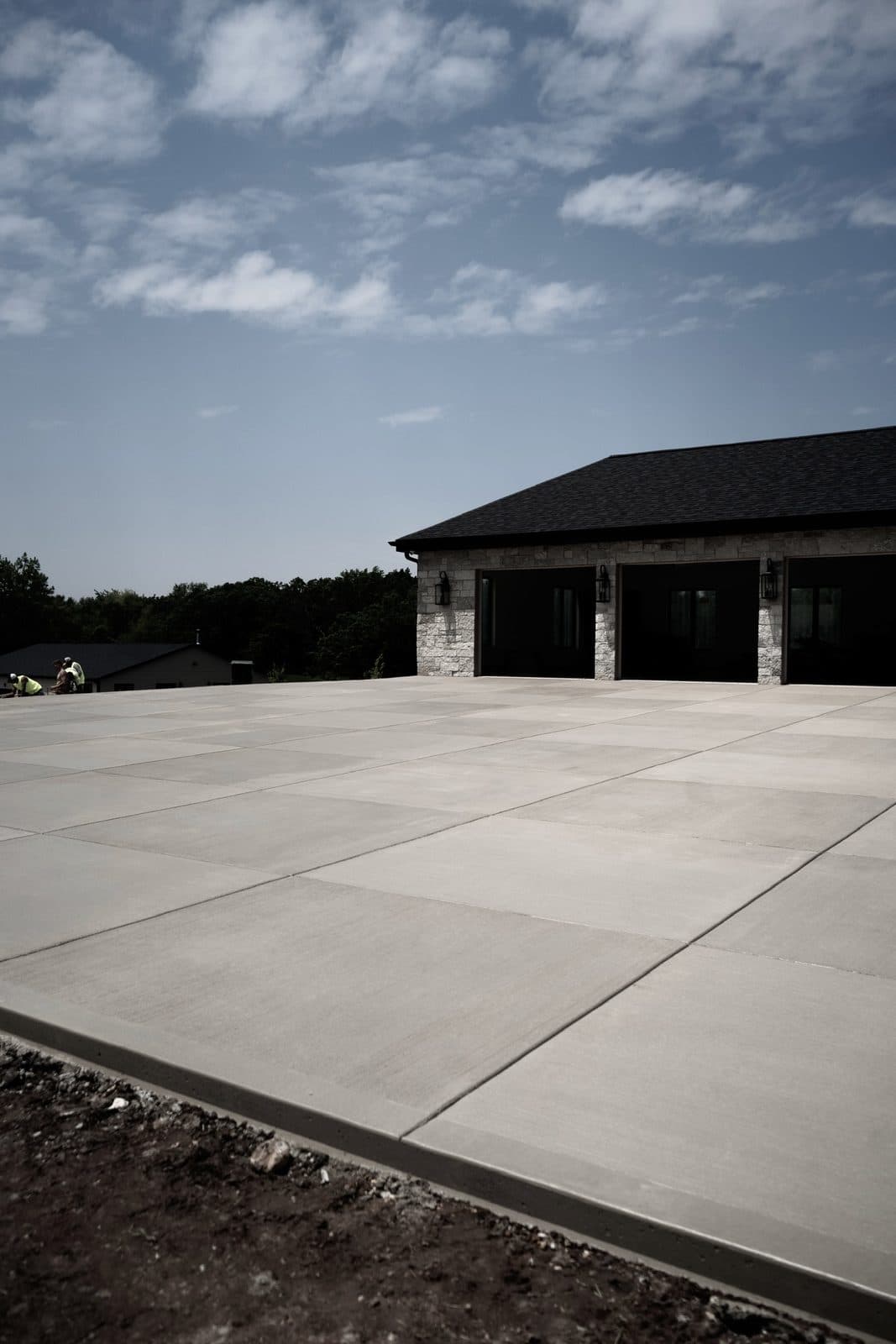
Concrete lots and approaches cost more up front than asphalt and hold up under the loads that destroy it: refuse trucks on the same line every week, trailers turning in the same spot, and standing loads at a dock. On a drive lane or an approach, concrete is usually the cheaper surface measured over the life of the property.
Drainage is the part that decides whether a lot works. Pitch to the inlets, grades that hold, and no low spot collecting water that freezes and turns into a claim. We set that from the civil drawings and we check it before we pour, not after.
Foundations
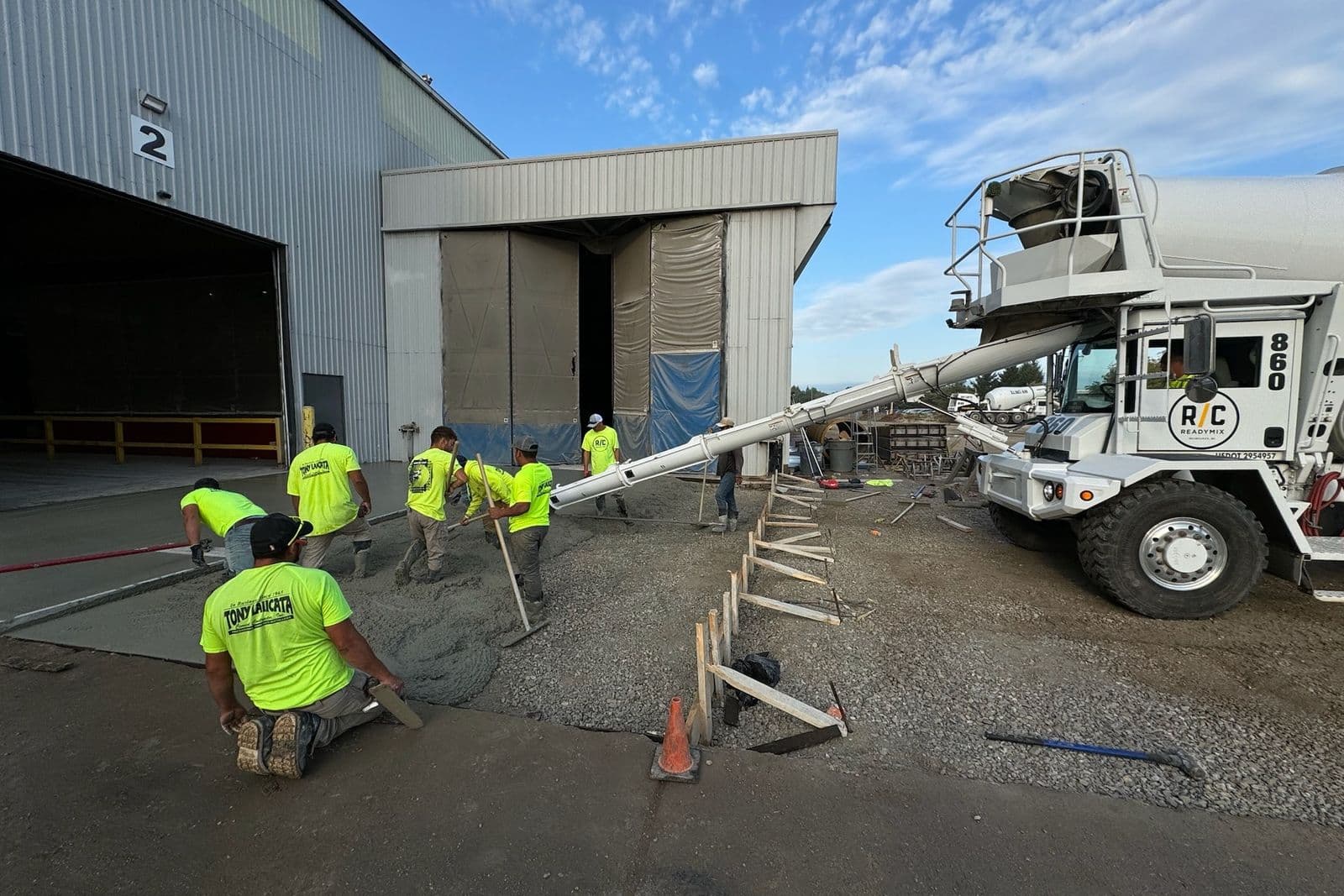
Footings, foundation walls, piers and frost walls for light commercial and industrial buildings, coordinated with the general contractor so the concrete is not the thing holding up the framing crew.
Excavating and trucking are in house, which removes a handoff. On a foundation package that usually means fewer days on the schedule and one fewer subcontractor for the GC to chase.
Working Around Your Operation
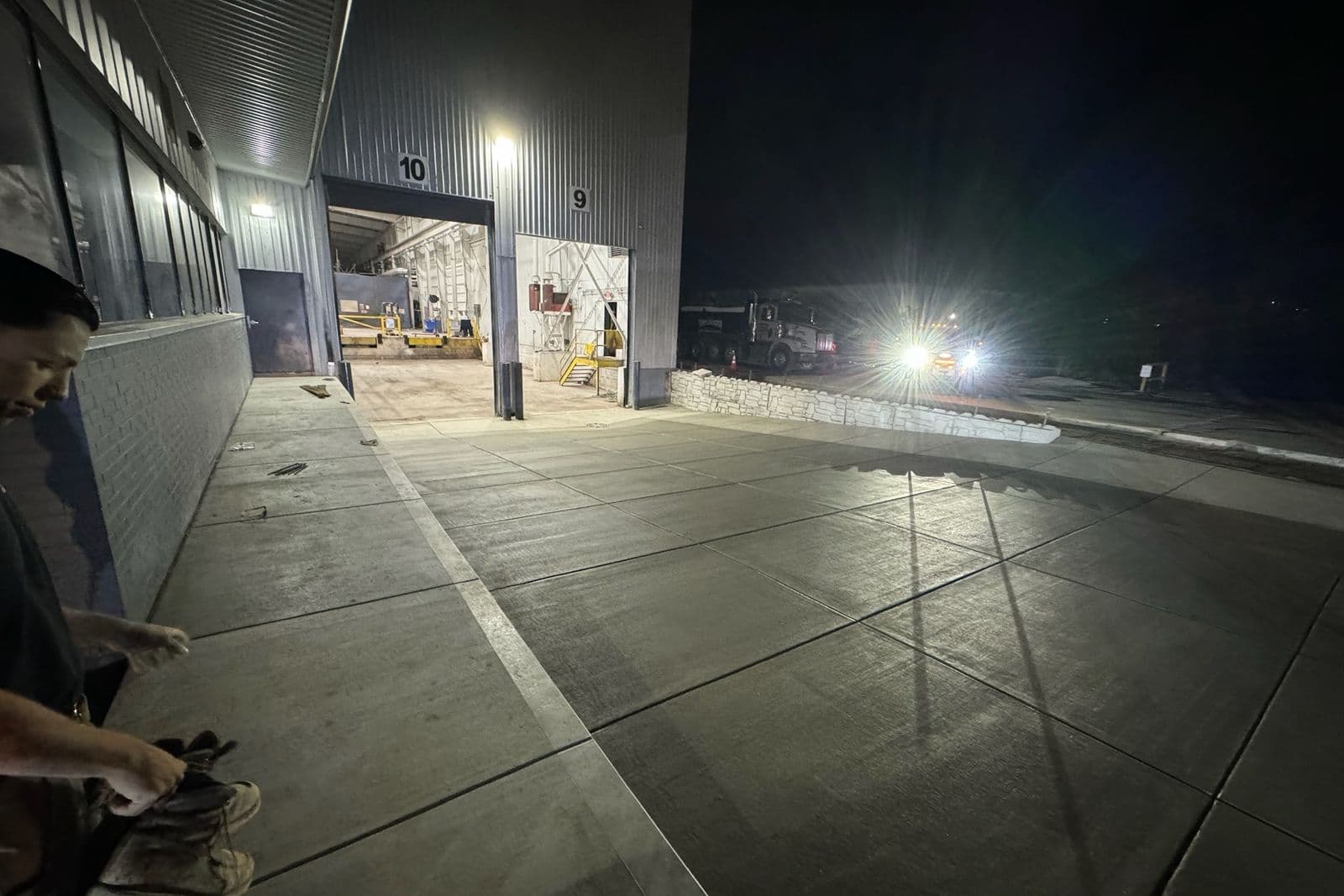
Most commercial concrete has to go in without shutting the business down. That means phasing the work so access stays open, and pouring outside operating hours where that is the only way to keep a dock or an entrance in service.
We do night pours when the job calls for it. It is harder, it needs lighting and a bigger crew, and it is frequently the difference between a project that inconveniences a tenant and one that costs them a week of trading.
Request a Bid
Send the plans and the schedule and we will price the scope. We are fully insured, we carry the certificates your project will ask for, and we can provide references for comparable work on request.
If we are not the right fit for the scope, we will say so early rather than tie up your bid schedule. Call 262-895-4992 and ask for Tony or Nino.
Commercial Concrete: what you should ask
- Do you work as a subcontractor for general contractors?
- Yes, and it is a large part of what we do. We work off the plans, coordinate with your schedule, carry the insurance certificates your project requires, and provide references for comparable work. Excavating and trucking are in house, which is one fewer subcontractor to coordinate.
- Can you pour outside business hours?
- Yes. We run night and weekend pours where keeping a dock, an entrance or a drive lane in service requires it. It needs lighting and a larger crew, so it costs more, and it is usually cheaper than the trading a tenant would lose otherwise.
- Concrete or asphalt for a commercial lot?
- Asphalt is cheaper to install and gives way under concentrated loads: refuse trucks on the same line weekly, trailers turning in the same place, standing loads at a dock. Concrete costs more up front and generally costs less across the life of the property. A common answer is concrete on the drive lanes, aprons and dock areas with asphalt on the parking stalls.
- How far do you travel for commercial work?
- Across Southeastern Wisconsin, further than we go for residential work, because commercial jobs are larger and scheduled further ahead. Describe the location and the scope when you call and we will tell you straight away whether it is one we should be bidding.
- Are you insured and can you provide references?
- Yes to both. We carry general liability and workers compensation and can supply certificates naming your project. References are available for comparable work by project type on request.
- How much lead time do you need?
- The earlier the better, and more than you would need in most climates. The pouring window here runs April through November and the calendar fills through it. Get the scope in front of us as soon as you have drawings. If we cannot hit your date we will tell you when you ask rather than when you are counting on us.
Get a real number on your job.
We walk the site, measure it, and put the price in writing. No charge, and no pressure to book on the spot.